
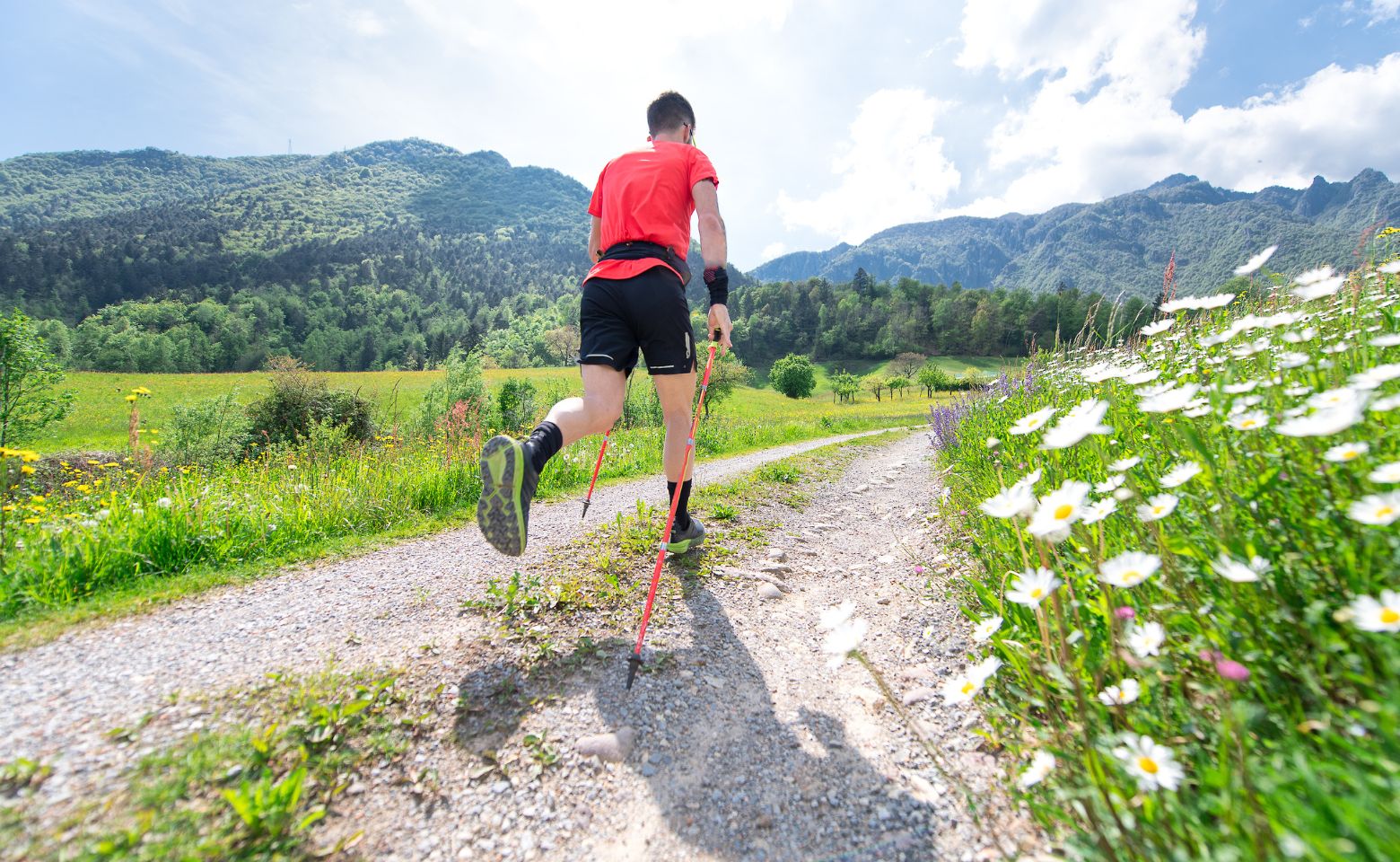
We have covered a litany of lower body, core and low back problems that are prevalent in the sport of ultrarunning. While those areas definitely take the brunt of the abuse we dish out as ultrarunners, the upper body can also be susceptible to aches and pains from long miles on the trail. Here are three common upper body injuries that we see in the ultra community, why they happen and some quick fixes for faster recovery.
Shoulder Impingement
This is a fairly common shoulder problem that a lot of people often mistake as a full rotator cuff tear. The injury can be quite painful, but recovery is typically quick with the help of a PT.
Some typical symptoms of a shoulder impingement include:
- Difficulty raising your arm above your head. The most pain occurs when your arm is straight out to the side, positioned at 90 degrees.
- Inability to sleep on the effected side.
- Pain that radiates down the lateral side of the shoulder.
- Pain relief when using anti-inflammatories.
- Initially, upon injury, the arm will feel “dead,” as if you can’t move it.
- Symptoms improve with time, but they don’t totally go away.
So, what is shoulder impingement? Let’s first start with shoulder anatomy. The rotator cuff is a group of four muscles that come off your shoulder blade and “cuff” the head of your humerus (upper arm bone). Basically, they are responsible for stabilizing your shoulder joint. One of those muscles, the supraspinatus, comes off the top of the shoulder blade, goes under a little boney prominence on your scapula called the acromion and inserts on the head of your humerus. The space it travels through is very small to get between the acromion and the head of the humerus. With poor shoulder mechanics, or a fall where you catch yourself on an outstretched arm, the head of the humerus can ride up and pinch or impinge on the supraspinatus. Remember that nasty fall you took on a downhill where you caught yourself and jammed your shoulder? That is a prime mechanism for causing a shoulder impingement.
Treating shoulder impingements is pretty straightforward in physical therapy. First, we make sure that you didn’t tear your rotator cuff, because that can happen in a fall like this. Once we have established that you didn’t tear the rotator cuff, we focus on strengthening your shoulder using proper mechanics, activity modifications to avoid increasing your symptoms, soft tissue work to keep the joint and the muscles around it from getting stiff, and possible referral to a MD for medical management if the symptoms continue to linger. Usually, people will recover from this injury in a couple of weeks.
Neck Pain
There are a lot of different types of neck pain, but the one we’ll focus on tends to start at the base of your skull and travels down to your shoulder and is common in ultrarunners.
Typical symptoms include:
- Pain that starts after a long run with a heavy running vest.
- Pain after starting to experiment with using poles on longer runs.
- Pain makes it difficult to raise your head and makes sleep uncomfortable.
- The increased frequentcy of headaches.
The main culprit of this type of neck pain is your upper trapezius. This muscle travels from your shoulder and inserts on the occiput of your skull, just behind your ears. Its main function is to lift your head and shrug your shoulders.
The muscle will get angry for a couple of different reasons. The weight of a vest on your shoulders is supported, in part, by the upper trap muscle, and the bouncing of the vest causes it to activate to stabilize the vest. After a bunch of hours on the trail, it will get sore. Using poles incorrectly can also cause overuse of the upper trapezius. As you reach forward with a pole and you are shrugging your shoulders to move your arms, you are overusing the upper trap. Again, it will really start to bark at you.
Treatment for this is also a snap. Working on posture and proper shoulder and neck mechanics when using poles, shoulder and neck strengthening, focusing on relaxing the shoulders when running, adjusting the fit of your vest and soft tissue work to loosen the upper trap can all help nip this one in the bud quickly.
Tennis Elbow
Lateral epicondylitis, or “tennis elbow,” can be an issue for some ultrarunners and often happens with pole use. If you suspect that you have tennis elbow, your symptoms can include:
- Pain on the outside of your elbow, radiating from the muscles laterally below, to their attachment point above the elbow.
- Pain increases at night.
- Difficulty holding heavy objects with an outstretched arm.
- Pain during simple tasks like shutting a car door.
In the ultrarunning world, improper technique when using poles is the main culprit, and there are two things that need to be addressed. First, even though the pain you are feeling is around your elbow, the problem is actually with the wrist. Tennis elbow symptoms are driven by the overuse of your wrist extensor muscles (laterally, just below your elbow) and inflammation of their tendon that attaches above the elbow. If you are holding your poles with your wrists extended for long periods of time, those muscles and the tendon are under them can be strained trying to stabilize your wrist and elbow. After a while, they can get angry. Also, these structures can get irritated if your elbow is fully locked out when you reach forward and plant your pole.
However, there’s an easy fix. Make sure your wrist is in neutral and you have a slight bend to your elbow when planting your poles. This will help minimize the strain on the muscles and tendon and make for happier miles on the trail.
Hope this helped some of you that might be dealing with these injuries. Here’s to future injury prevention and a speedy recovery. See you on the trails!