
This article was originally published in the May/June 2024 issue of UltraRunning Magazine. Subscribe today for similar features on ultra training, racing and more.
Running has always been my happy place—a place I think and unwind. I’ve resisted the idea that running places stress on my female body. But speedwork, long runs and weightlifting stress muscles. And with perimenopause and then menopause, my body’s ability to process carbohydrates and proteins needed for training and running has changed.
It’s all about estrogens, which fall as women mature. Estrogen helps regulate how my muscles use carbohydrates. As my estrogen levels fluctuate, I’m more prone to bonking. Protein is vital for maintaining muscle mass and bone health, but my ability to absorb protein is decreasing. When I eat—what sports nutritionists call nutrient timing1—also matters, both for maintaining consistent energy throughout the workout and recovery.
I’ve always believed that eating should be fun. I’ve never counted calories or grams of anything, but I wondered if a little nutrition review might help me recover faster after a workout. I started with “what,” a quick review of macronutrients, to help me understand how and why some foods provide better energy than others. Then I tackled “when,” taking the current nutrient timing recommendations and adapting them to my workout.
Here’s what I discovered.
WHAT TO EAT:
Macronutrients include the three fuels we use for workout and recovery: protein, carbohydrates and fat.
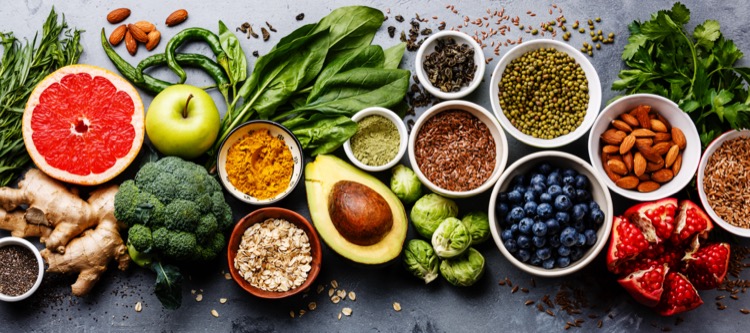
Protein is the basic building block of bone, muscle and most other tissues. Our bodies have 20 amino acids which, when linked into chains, form many of the enzymes and hormones that build and repair muscle and bone, aid digestion, carry oxygen to cells and regulate immunity. You may hear people talk about complete and incomplete proteins. Complete proteins contain all nine of the amino acids our bodies cannot make. Fish, poultry, meat, eggs, dairy, quinoa, hemp, buckwheat and soy are examples. Most legumes are incomplete proteins, meaning they lack some of the essential amino acids. Combine legumes and grains—rice and beans, hummus and pita, or peanut butter on whole wheat bread—and you’ve got a complete protein.
Carbohydrates are essential fuel for optimal performance—sugar molecules the body breaks into glucose for energy. They come in three forms: sugar (think honey and fruit), starches (rice, pasta and corn), and soluble fiber (bran, barley, nuts, seeds, beans and peas). Sugars and starches are easily converted to glucose and provide the quick and efficient muscle energy needed during a long run. Soluble fibers require a few more steps to break down. They also lower cholesterol and regulate blood sugar by lowering absorption of sugar into the bloodstream. This makes them ideal post-workout fare.
Most gels and powders will list grams of carbohydrate per serving. It’s helpful to know what type of carbohydrate, as stomachs can be sensitive to different formulations. Simple sugars with only one carbohydrate—glucose, fructose and galactose—are easily absorbed. Simple sugars with two carbohydrates—sucrose, lactose and maltose—are a combination of glucose and fructose or galactose and take more energy to absorb.
Fats play a vital role in hormone production and nutrient absorption and are categorized by their number of hydrogen atoms. The more hydrogen atoms, the harder your body works to convert them into fuel. Fats with fewer hydrogen atoms, like polyunsaturated fats and monounsaturated fats, have many health benefits, including decreasing inflammation and improving cholesterol. Think of polyunsaturated fats as foods you eat for omega-3 fatty acids (salmon, trout, sardines, chia and flax), and monounsaturated fats as cooking oil (olive oil, avocado oil and nut oil). Saturated fats are solid at room temperature. They include butter, cheese and fatty meats. I think of these as comfort food—tasty, but best in moderation.
WHEN TO EAT:
Fuel before the workout: Pre-fueling can be a challenge. Sports nutritionists recommend ingesting protein and carbohydrates 1-2 hours before a workout.3 Easy, if you work out later in the day, but I’m not getting up at 3:30 a.m. to eat. I also struggle with breakfast. Eggs and oatmeal gag me, bagels are boring and leftover pizza is tasty but less than ideal before speedwork. My current go-to is coffee with a half cup of milk, a Superhero muffin4 and almond toast eaten during my warm-up. For intense or longer workouts, I add a cup of yogurt with blueberries and walnuts.
Fueling During the Workout: If I ate appropriately before my workout and it’s no longer than 60 minutes, I’m set. If I’m going longer than 60 minutes, or following my run with a weight session, then I need fuel in the form of carbohydrates. The recommendation is 60–90 grams of carbohydrates per hour. Most beverage powders and gels contain 25 grams of carbohydrates per scoop or packet. To reach the desired range, I use two scoops of glucose, dextrose or sucrose-based powder in my bottles and supplement with 1–2 glucose, dextrose or sucrose-based gels hourly. I try to avoid maltodextrin and fructose-based gels and powders as my changing estrogen levels make these difficult to digest.
Post-Workout
The very idea of a workout is to stress the muscles. During the recovery, the muscle rebuilds with greater strength and endurance. After a workout, I need to replace the glycogen that was removed from the storage pool, and provide protein for muscle repair and growth. The recommendation is 20 grams of low-glycemic carbohydrates (think starch, like pasta or brown rice, and soluble fibers, like beans and grains) and 20–30 grams of protein within 30 minutes of completing a workout.5 I’ve found a protein smoothie works well. My favorite recipes are in the cookbook, Run Fast. Cook Fast. Eat Slow.4 If I don’t have time to make a smoothie, nuts with an apple or brown rice with beans and chicken are excellent alternatives.
Meals and Snacks
Mathematically, as an active menopausal woman, I need to eat 3 grams of carbohydrate per kilogram of body weight, 2 grams of protein per kilogram of body weight and 1.2 grams of fat per kilogram of body weight, daily.2 I think of this visually as proportions on a plate, where one quarter of the plate is a protein like chicken, fish or beans; one quarter of the plate is covered with rice, pasta or whole grains; and fruits and vegetables fill the rest of the plate.
Hydrate and Sleep
Finally, there are two other components essential to training and recovery. The first is hydration. Menopause makes the thirst filter unreliable,6 so I have a hydration plan to consume 16 ounces (500 ml) prior and 16–32/hour during the workout. Water alone is not hydrating, so I use an electrolyte drink during running, and typically rehydrate with coconut water or other hydrating fluids after.
Finally, sleep.6 Recording the amount and quality of sleep as part of your training log can be enlightening when it comes to your sleep patterns. Mine has helped me identify several things that disrupted my sleep. It also serves as a guide—if my sleep scores are poor, I adjust my workouts accordingly because I know my body is not recovering well.
Eating should be fun and support our participation in the sport we love. Knowing what to eat, and when, will keep your muscles strong and your recovery smooth.
References
- Kerksick, C.M., Arent, S., Schoenfeld, B.J. et al. International society of sports nutrition position stand: nutrient timing. J Int Soc Sports Nutr 14, 33 (2017). https://doi.org/10.1186/s12970-017-0189-4
- Deldicque L, Francaux M. Recommendations for Healthy Nutrition in Female Endurance Runners: An Update. Front Nutr. 2015 May 26;2:17. doi: 10.3389/fnut.2015.00017. PMID: 26075206; PMCID: PMC4443719.
- Witbracht M, Keim NL, Forester S, Widaman A, Laugero K. Female breakfast skippers display a disrupted cortisol rhythm and elevated blood pressure. Physiol Behav. 2015 Mar 1;140:215-21. doi: 10.1016/j.physbeh.2014.12.044. Epub 2014 Dec 27. PMID: 25545767.
- Flanagan, S, Kopecky E. Run Fast. Cook Fast. Eat Slow: Quick-Fix Recipes for Hangry Athletes. 2018 Harmony/Rodale.
- Sims ST, Kerksick CM, Smith-Ryan AE, Janse de Jonge XAK, Hirsch KR, Arent SM, Hewlings SJ, Kleiner SM, Bustillo E, Tartar JL, Starratt VG, Kreider RB, Greenwalt C, Rentería LI, Ormsbee MJ, VanDusseldorp TA, Campbell BI, Kalman DS, Antonio J. International society of sports nutrition position stand: nutritional concerns of the female athlete. J Int Soc Sports Nutr. 2023 Dec;20(1):2204066. doi: 10.1080/15502783.2023.2204066. PMID: 37221858; PMCID: PMC10210857.
- Stachenfeld NS. Hormonal changes during menopause and the impact on fluid regulation. Reprod Sci. 2014 May;21(5):555-61. doi: 10.1177/1933719113518992. Epub 2014 Feb 3. PMID: 24492487; PMCID: PMC3984489.
- Mantantzis K, Campos V, Darimont C, Martin FP. Effects of Dietary Carbohydrate Profile on Nocturnal Metabolism, Sleep, and Wellbeing: A Review. Front Public Health. 2022 Jul 13;10:931781. doi: 10.3389/fpubh.2022.931781. PMID: 35910892; PMCID: PMC9326315.