
 Our reviews are 100% organic. We do not accept payment for reviews or bundle with advertising budgets. In most cases, the brand is providing the product to our reviewers free of charge.
 The original OpenFit headphones released in 2023 represented a new product category for Shokz, and as often happens with innovation, they did some things extremely well, and also had some glaring drawbacks. OpenFit headphones were built to be extremely lightweight and comfortable, and they offered impressive audio quality through technologies that effectively directed sound toward the ear canal while still maintaining the “open” dynamic that allows you to stay aware of your surroundings.
Two deficiencies that are problematic for trail runners were a somewhat unsecure overall fit with a tendency to shift around on the ear during intense activity, and an inability to control any audio features from the headphones themselves. All audio features had to be controlled from your phone, which is inconvenient at best when you’re navigating single track or tricky footing on trails.
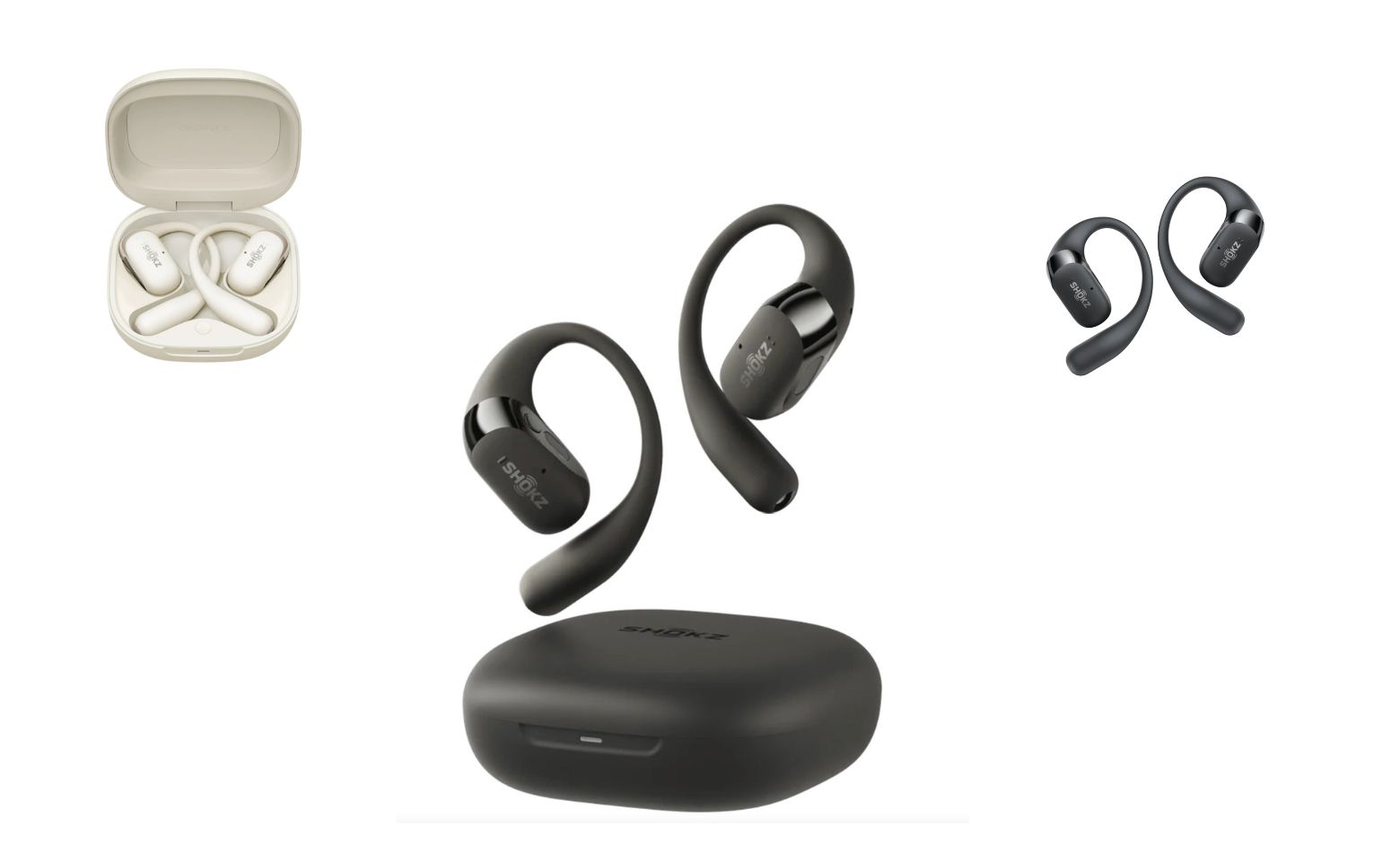
With the newly released OpenFit 2 series, Shokz addressed both of those deficiencies, and also added a number of technologic improvements to enhance the overall sound quality and user experience. The headphones use Bluetooth 5.4 for faster connectivity and improved signal stability, and call clarity is enhanced by advanced noise-cancelling technology and AI algorithms to filter out unnecessary noise. Sweat and weather resistance is slightly improved (from IP54 to IP55), and battery life sees a nice increase of almost 40% from the original model. The series consists of two different versions, a Standard OpenFit 2, and a slightly more expensive OpenFit 2+ that adds Dolby audio and Qi wireless charging technologies to the standard version.
One tradeoff that works well on both models is a slight increase in weight, by about 1g per earphone, in exchange for a more substantive ear hook mechanism that keeps the OpenFit 2 securely in place better than the original version. The nickel-titanium alloy is also slightly moldable, so the loops can conform to your ear shape for a personalized fit. Stability is a key issue with this style of headphone, as sound quality is entirely dependent on the speakers staying positioned above the ear canal and also because you never want headphones to feel like they’re slipping off. The fit is secure enough that we don’t have any worries about them coming loose while moving quickly on technical trails, and they also stay in place securely through gym workouts when we are occasionally inverted. An updated silicone layer keeps these headphones comfortable even with several hours of continuous use.
Even better, from a convenience standpoint, is the incorporation of physical buttons on the casing in addition to the touch function of the previous OpenFit device. There is one physical button on each ear piece; either one can be used to play or pause music, advance or repeat audio tracks, or pick up and hang up incoming phone calls. Volume is adjusted by a press-and-hold action; the right side increases volume and the left side decreases it. These same operations can be done by a touch zone on the casing, but because it’s sometimes clumsy to find the exact right spot to tap, having a physical button to manipulate makes these functions far easier. We’ve successfully used the push buttons with light-to-midweight gloves, which is great for use in colder weather.
One area where Shokz continues to innovate and elevate is the overall sound quality on their devices, and that is especially apparent on the OpenFit 2 models. The standard version features updated versions of the company’s DualPitch, DualBoost and OpenBass technologies that combine to create richer audio tones while directing them specifically to the ear canal with minimal sound loss. The DualBoost is particularly interesting, as it combines two individual speakers to create an extra-large, low-frequency bass range with an independent high-frequency unit for the top end. Sound clarity on the standard version of these headphones is quite impressive, and the Dolby component of the OpenFit 2+ adds a noticeable depth of detail along with a minor surround sound dynamic. We appreciate the Dolby audio when trying to catch every note in complex drum tracks, and it’s also great for anyone who uses their laptop as a home theater system. Dual pairing capability of the OpenFit 2 series allows you to be connected to your phone on a run, and to any other device at work or home.
Purely from an audio standpoint, the OpenFit 2 series are something of a middle ground between bone conduction headphones and traditional earbuds. They deliver an overall depth and quality of sound that clearly exceeds bone conduction models, but not at the level of true in-ear or over-the-ear headphones, although the gap is less than you might think. They aren’t quite as permeable to external noise as bone conduction headphones but are vastly better than in-ear models. In our experience on roads and trails with the OpenFit 2, the penetration of external sounds is somewhat diminished, but still sufficient enough that we could safely maintain awareness of our surroundings. And from nearly every other aspect, the specs and performance of these models make them very well-suited for long duration activity on the trail or anywhere else.
Shokz OpenFit 2 and OpenFit 2+ are available at www.shokz.com.
Features:
- Audio enhancement technologies: DualPitch 2.0, DualBoost 2.0, OpenBass 2.0
- Dolby audio for OpenFit 2+
- Casing: nickel-titanium alloy with silicone plastic coating
- Physical multi-function button operation
- Battery life (single charge): 11 hours
- Recharge capacity: Up to 48 hours with charging case, 10 minutes for 2-hour quick charge
- Wireless Qi case charging for OpenFit 2+
- Case dimensions: 65mm x 65mm x 25mm
- USB-C charging cable
- Water resistance: IP55
- Weight: 4g each
- MSRP: $125 for standard version, $160 for Dolby audio and wireless charging