
If you knew me years ago, you might have described me as someone built for endurance. I tended to lean into activities that took time and effort: graduate studies, yoga training, writing and long-distance running races. It was the rhythm I lived by – steady, persistent and comfortable in the spaces where patience and heart mattered most.
Along my journey, I lost my mom, and then my dad and while I thought I would break, I learned to keep loving, striving and trusting. Their fierce determination to live, and their subsequent acceptance to die, were critical life lessons. I witnessed my mom laugh and have fun regardless of a terminal cancer diagnosis. She didn’t drag others down with her and didn’t blame anyone. When she died, I didn’t know how I was going to live without her. She was my north star and the keeper of my fears and dreams.
So many years later, I sat beside my dad in the hospital for 31 intense and meaningful days as he faded. He told the hospice nurses daily, “I am trying so hard [to live].” When he passed, I was rattled and could not feel the ground beneath me. If I had been his rock, he was my granite.
I used to think resilience was a badge we acquired after living through challenging situations. Over the years, though, I’ve learned resilience is perhaps a capacity that we develop over a lifetime. I’ve heard resilience called a muscle, mindset and action – it is all of these things.
It’s also cleaning out your parents’ house when they die, and your capacity to live through the pain of losing the people responsible for your existence. In my darkest days, I turned to ritual as a lifeline — wake up, yoga, run, journal and work. These small, steady motions became a quiet prayer, a rhythm that stitched my days back together. In their simplicity, I found something like salvation and in their repetition, I found my way back to myself. This, too, is resilience.
Last January, when I received a diagnosis of Atrial Fibrillation (AFib), a heart disorder where the upper chambers beat in fast, chaotic, irregular patterns and later, Supraventricular Tachycardia (SVT), an abnormally fast heart rhythm that starts above the ventricles, I felt as if the lights went out in my life. It was complicated. AFib wasn’t just another condition, it was the same disorder that had reshaped my dad’s later years. He received the diagnosis at age 85; I received it decades earlier. I knew what it had cost him: multiple ablations, a pacemaker, medications and a shrinking radius of movement. The fear of inheriting his trajectory unsettled me.
Over time, I learned that the issues in my heart changed how I felt – not only because I was emotional about AFib and SVT and the connection to my dad, but because my body was no longer regulating emotion the way it once could. This was physiological and scientific. AFib didn’t just affect my heart rhythm; it affected my emotional rhythm. When my heart lost regularity, my feelings did too. Emotions may not originate in the heart – despite what Hallmark would have us believe – but they do move through it. When my heart lost its regulatory steadiness, my emotional range dulled as well.
I wish I had understood all of this sooner. I would have been able to tell my dad that what he was experiencing wasn’t just physical – it carried a weight that pressed on his emotions as much as on his body. I would have moved toward him with tenderness instead of urgency.
Looking back, I see that my insistence for him to keep going had little to do with strength and everything to do with fear. When he faltered, something in me faltered too. I wasn’t ready for him to slow down after my mom passed. So I pushed, not because he needed to move, but because I needed him to stay – close, steady, part of the life I was trying so hard to hold together.
If I had understood, I would have met him where he was.
Throughout January 2025, even as I struggled to breathe and coped with relentless palpitations, I kept moving – walking, jogging, trying to run 5-10 miles a day to finish the Badwater 267 Virtual Race, which I completed. I believed the cardiac ablation the electrophysiologist scheduled would reset me. I imagined resting for a week and returning to my life, renewed. But five days after the procedure in February 2025, when I was cleared to walk, I couldn’t make it 2 miles without stopping to catch my breath every few minutes. One mile in, my heart raced, and I was dizzy and in a cold sweat. I ended that outing in an Uber, unable to walk home. A few days of recovery became weeks, then months, and I felt unmoored.
Reading The Haywire Heart by Dr. John Mandrola, Chris Case, and Lennard Zinn, provided insights and case studies for a variety of athletes diagnosed with an array of arrythmias. I learned what I wasn’t ready to hear: many athletes assumed they would bounce back quickly from arrhythmias, only to discover that recovery wasn’t linear and returning to competitive levels was often no longer possible. That realization humbled me.
Doctors told me ablation recovery could take three to four months, but the day‑to‑day reality, the odd beats, skipped rhythms, breathlessness – felt endless. I sought second opinions, did my research and learned that while doctors listen, the lived experience of AFib is difficult to convey.
Even though AFib on its own isn’t fatal, the constant awareness of my heartbeat created a persistent unease. Palpitations, flutters, racing pulses, skipping beats – sensations I’d never noticed – suddenly governed my mental and physical space. With beta blockers, blood thinners and ACE inhibitors, I kept traveling, working and moving, but often with a quiet fear humming under the surface. Some days my heart felt foreign, and unpredictable, like a wild creature living within my chest. I focused on what I could control: a clean, alcohol-free diet, meditation and staying active in gentler ways. Still, I often felt fatigued and frustrated. My resilience and optimism were gone. I felt used up and done.
When my mom died, ultras gave me purpose – the physical pain of racing long and far alleviated the mental and emotional pain of loss for me in many respects. And beyond the movement, running ultras gave me the space, time and solitude to reflect, grow and heal.
They also gave my dad a new adventure. He loved the races – the community, the food, staying up all night cheering runners on and cheering me on. When he died, I counted on races to reflect and mourn and spend time in nature with my dad’s spirit. So, when running became challenging, and the cause was tied to the factor that led to my dad’s downfall, I was conflicted. I didn’t know if this was the universe sending me a message or random bad luck.
I kept asking myself what I wanted for this next chapter. Did I aspire to run long races again, or was I ready to give them up considering all that was going on with my health? After hundreds of races – more than 40 of a 100 miles or longer – did ultrarunning still matter?
For me, resilience has often been synonymous with movement – mental and physical. Yet over this past year, as I’ve been more still than ever, I’ve come to believe resilience starts in stillness: how we show up in our minds and hearts when we can’t run away. What we tell ourselves about the life we live when no one is watching. Do we give up, or do we adapt, cultivate emotional regulation, make meaning and shift our mindset? My resilience, I’m learning, stems from the narrative I speak to myself whether I’m in motion or stillness.
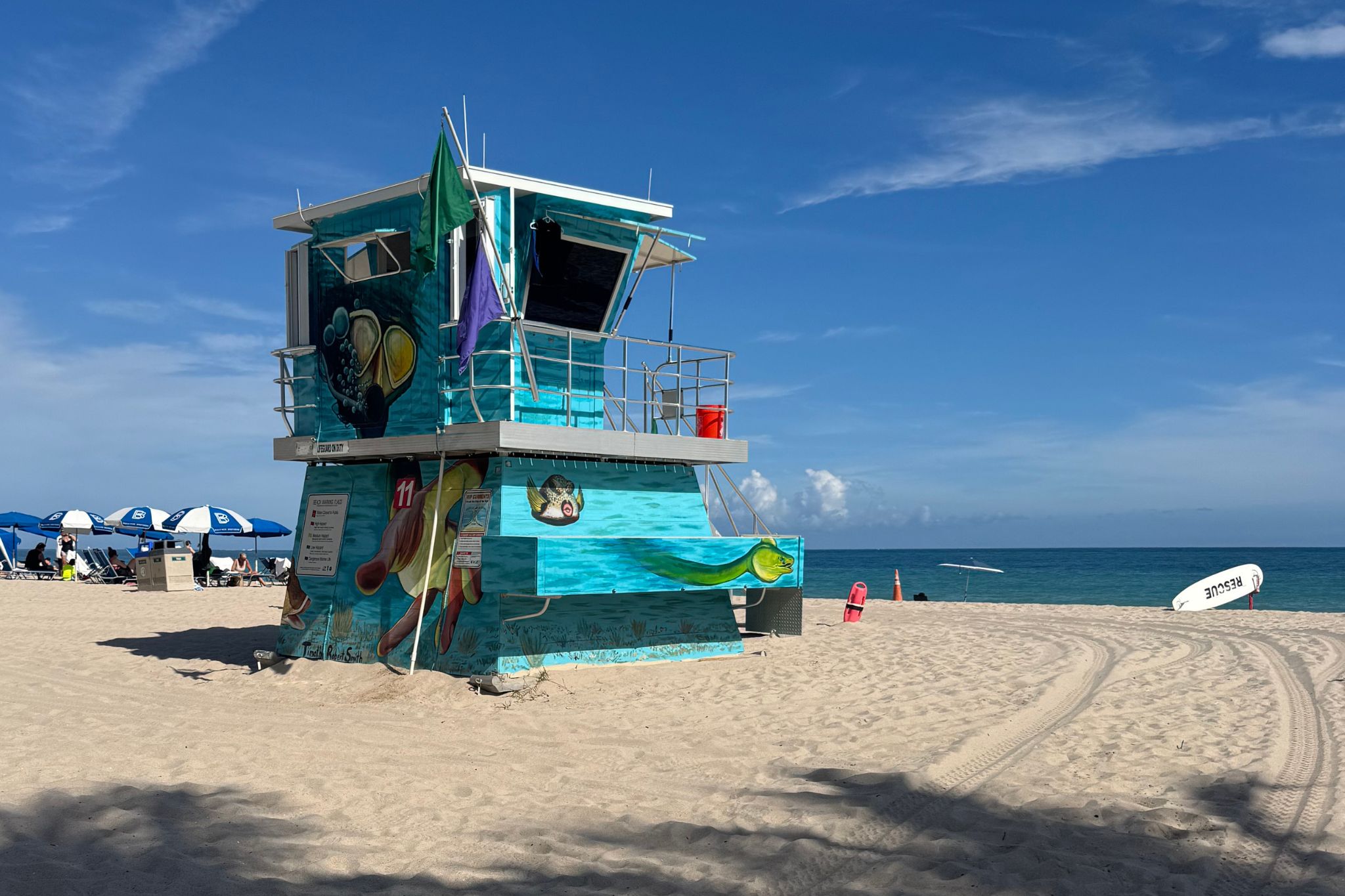
In January 2026, I attempted the Badwater 267 Virtual Race for the sixth time. I didn’t know what to expect, so I leaned once again on ritual and trust. My “why” was simple: I wanted to feel my feet moving; I wanted to see the sunrise down by the beach each morning; I wanted to sweat and breathe and look around.
It was hard at first. I hadn’t asked my body to run with consistency or pace for more than a year. But a few weeks in, something shifted. I found my flow again. Managing electrolytes, hydration and rest took effort, yet it slowly became easier, and a version of myself I had missed began to return.
Three weeks in – more finished than not – I was running one morning beneath a blanket of clouds with rain coming down in a steady drizzle. I looked out at the Atlantic, stretching into forever, and thought: this. I breathed it in. Everything I had hoped for was there – the earth beneath my feet, the sea reminding me of possibility with its depth and mystery, the quiet sense of my mom and dad somewhere just beyond the horizon, close and far all at once. Crystal blue waves folded into shore, the distant line where sky met water, the rain on my skin reminding me I was still here. Yes, the year had been hard – but that wasn’t the only story.
Somewhere deep inside, hope stirred – the kind that rises when I’m fully tapped into myself. I felt lucky to move, to belong to the world, to witness moments that feel like magic. And in that moment, I trusted that so much goodness still lay ahead of me, despite the losses, the pain and the disappointments.