
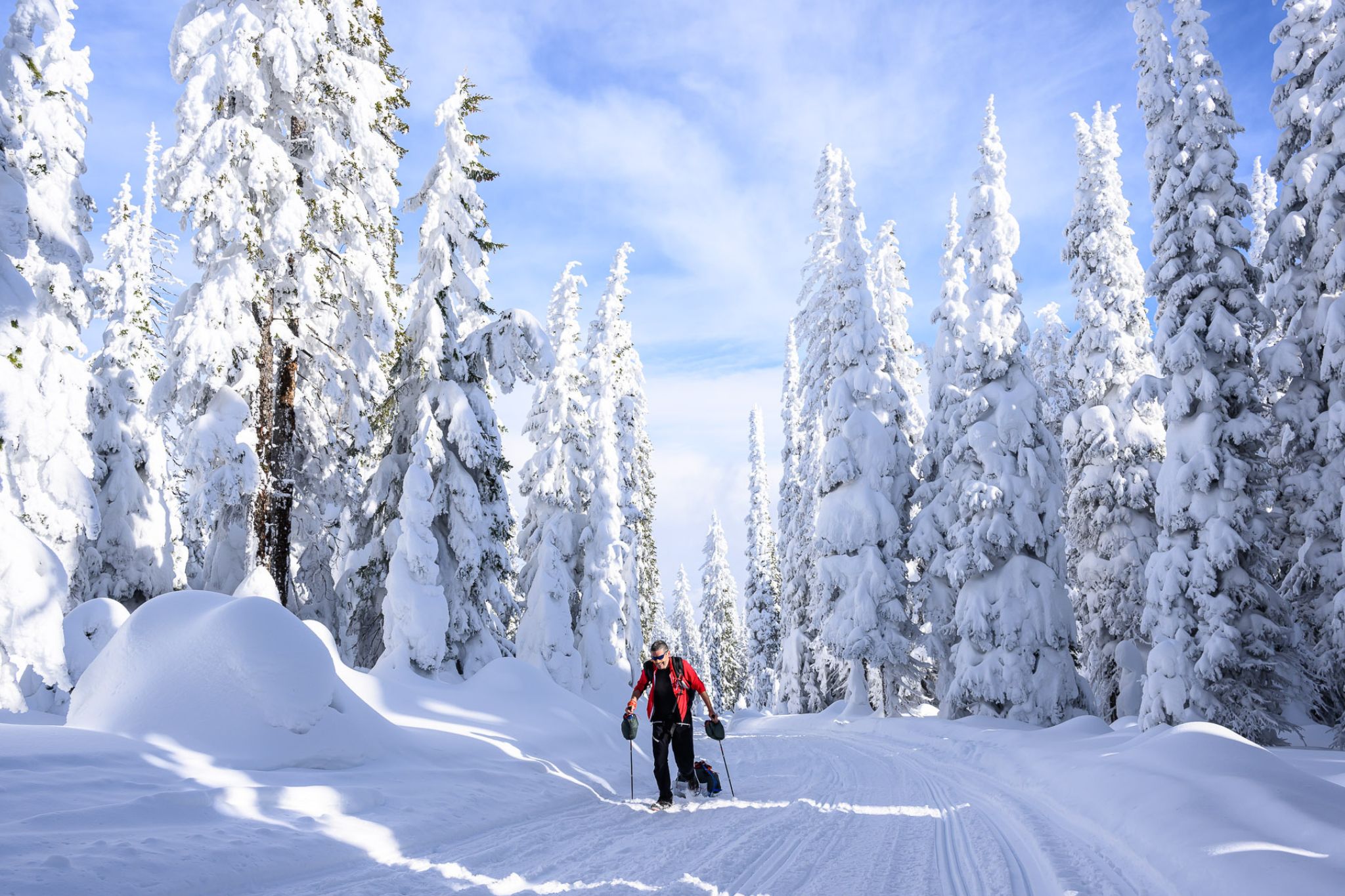
I sat down with Jay Petervay, founder and RD of the Fat Pursuit bike/ski/run ultramarathon that takes place in southeastern Idaho each year, and is one of a handful of qualifying events for the Iditarod Trail Invitational (ITI). The Fat Pursuit is well known in the fat biking community, but it has only been open to skiers and runners for the past four years. Jay’s enthusiasm for sport, especially as it relates to being safe and proficient in winter environments, became more than evident as we discussed the Fat Pursuit.
Q: What was your inspiration for starting the Fat Pursuit?
We are in year 13 of the event. In the lead up to the inaugural Fat Pursuit, fat biking was relatively new. I come from a competitive background in cycling, and I also love winter environments. Naturally, when fat bikes emerged, I was able to blend my two passions. At the time, fat bikers were not really a recognized user group. We were not allowed on snowmobile trails nor were we allowed anywhere that non-motorized vehicles were not permitted. I advocated for the recognition of fat bikers, and I wanted to increase the opportunities for them. We’ve come a long way since the beginning as there are now policy and signage differences. Bike riders now are generally welcomed alongside winter motorized vehicles, as well as many Nordic ski areas where there are dedicated fat bike routes. Beyond opportunity, the educational component was always very important to me. I use this event as an opportunity to share knowledge about how to explore and engage safely and comfortably in the outdoors in winter conditions (for the record Jay has completed 12 ITI’s himself). Initially, Fat Pursuit was a fat bike-only event. After COVID, we included skiing and running categories. We had established our organization to the point we felt comfortable supporting participants that would be on the course considerably longer than fat bikers. I hope that we can continue growing interest for the non-wheeled athletes.
Q: Why do you think runners haven’t participated en masse in the past?
I think because the 200k distance seems too long for a winter ultramarathon. It’s a little too intimidating. That’s one reason we have added a 30k option this year. Historically, approximately 10% of our participants have been runners for the 200k distance. The remainder are on bikes or skis. The percentage of participants goes up moderately for the shorter distances, at least that’s the case with our registrants for the upcoming event in January 2026.
Q: What is unique about your race? What Do you think would draw potential runners to your event?
It’s an adventure more than a competition. Participants need to be outdoor and winter savvy. The demands go beyond having good fitness and knowing how to handle yourself outside. We don’t have any qualifications either, literally anyone can register for any of the distances. Because of this, our organization is in a vulnerable position, but it’s a risk we are willing to accept to give anyone who thinks they can and want to actually have that experience. Because we are so passionate about delivering an adventure, we require participants to demonstrate their ability to boil water at some point along the course. This location is undisclosed until participants arrive at the determined point in the race. Beyond that, our volunteers have incredible local knowledge. Many of them have been with us from the beginning and they have qualifications they must meet before being able to serve as volunteers, this is to ensure the safety of our athletes. Because of the years of exposure to so many athletes, and the fact that many of the volunteers have been on the participant side, they are great at identifying athletes that are not likely to be able to finish and they know how to have those tricky conversations. They will be able to tell you exactly what you might expect between aid stations.
Fat Pursuit offers plenty of warm salty and savory foods, and of course, all the typical sweet foods that one expects in a well-supported ultra endurance event. We also time the event to land between New Year’s and Martin Luther King, Jr. Day with the expectation there will be fewer users on the trail. In short, you’re going to have an outstanding adventure and you will be incredibly well supported by our group of volunteers. The community is unique and it’s a great opportunity to come together with other like-minded folks oriented towards winter experiences.
Q: What do runners need to know to stay safe and have a good experience?
We cover this well in the bike workshop that participants can register for and participate in either before the race, or as a standalone workshop if they don’t feel ready to register for the event. The following are some of the main points we cover in-depth and that all potential Fat Pursuiters need to be proficient at:
- Moisture management. If you can’t stay dry, you’re going to have trouble. There’s really no way around this. Knowing how to manage perspiration, layers and stay warm, dry and comfortable is key to reaching the finish line.
- You need to know how to use your gear. Anybody can go procure everything on the gear list and beyond. But, if you don’t know how to utilize it effectively, it does a little good. The margin of error in winter situation is so much narrower than it is in most other weather conditions. Being well-versed in accessing and using your gear can literally be a lifesaver.
- Be self-aware, address problems early. It’s critical not to ignore even the smallest problems. The chances that those issues remedy themselves is highly unlikely. Participants have to be proactive in addressing anything from hotspots, cold earlobes to mechanical problems. The lessons learned in these situations happen hard and fast.
The event takes place just south of Yellowstone National Park in an area known for fluffy snow, plenty of wind and hardy folks on January 9-11, 2026. Visit Fat Pursuit to learn more.