
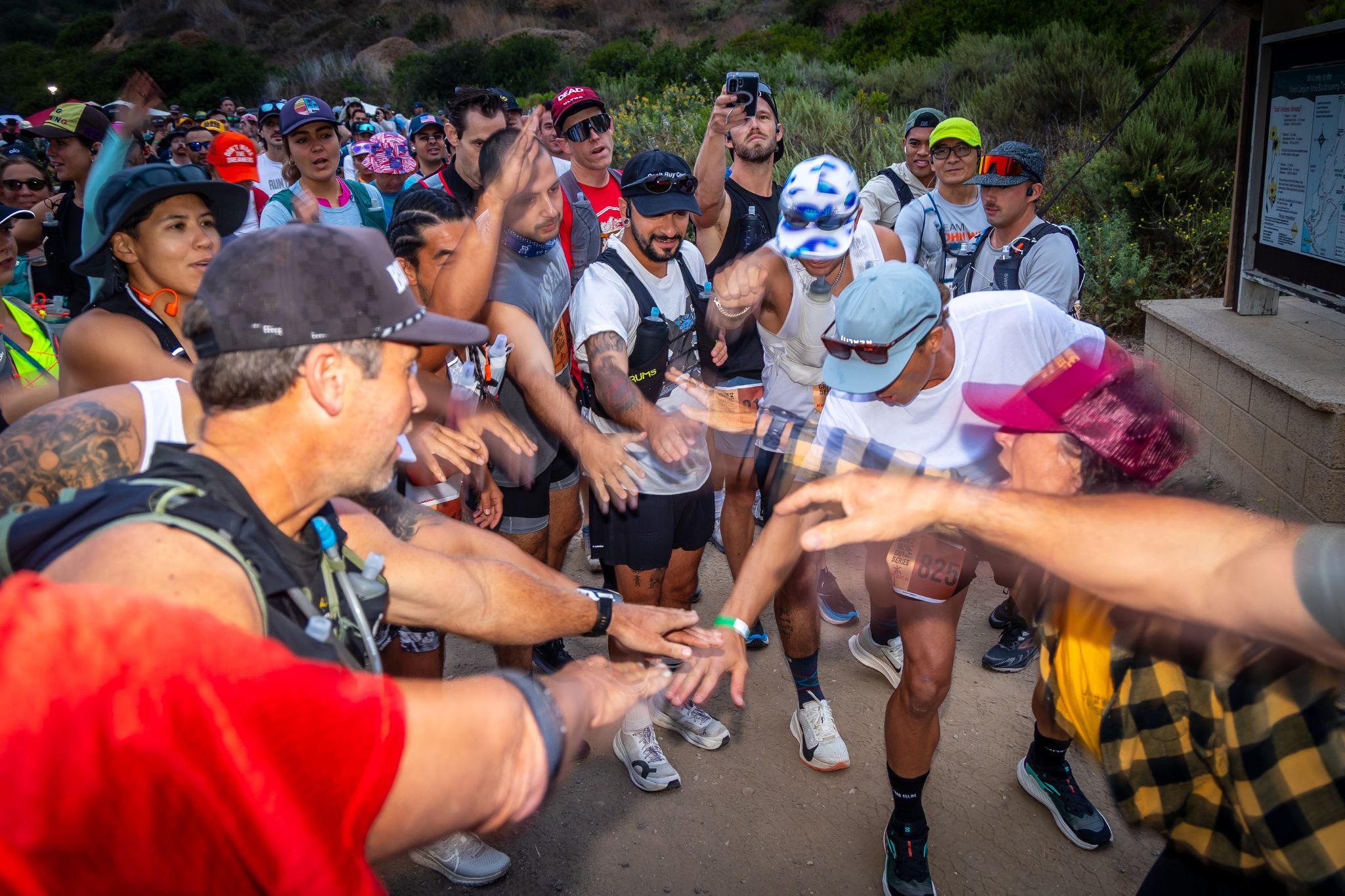
At mile 20, I stopped moving. Not slowed — stopped. I stood at the base of a hill in Newport Coast, California, hands on my knees, muttering to myself. I wasn’t being dramatic. I was done. Every reserve was spent.
Then a hiker appeared on the trail. He didn’t have a bib, but he had a big smile.
“Hi, I’m Dean. You having some trouble?”
I had arrived at 5:15 that morning with a plan I’d reasoned my way into over several weeks. The John Wayne Grit Series 50k had 5,000 feet of elevation gain, on trails I’d been running monthly. I had run marathons before and 4 more miles seemed survivable. But more than the distance, I needed to be here. My father died last April from mesothelioma and my mother is currently battling lymphoma. The race benefits the John Wayne Cancer Foundation, the course is practically in my backyard and I am 52 years old — old enough to know that you don’t always get to choose your fights, but sometimes you get to choose which ones you show up for.
I told myself, at every moment of doubt in training, whatever I endure on this trails is nothing compared to what the people I’m running for face every day.
The first 15 miles were relentless ups and downs. The air was cool, with enough mist to keep your skin confused. At the turnaround, refueling at the aid station, I could actually see my car in the parking lot. The organizers had told us at the start: if anyone isn’t confident about the return trip, the 15-mile mark is the place to make that call.
I recited my reason for being there — my dad, my mom, everyone fighting what I can only run for — and turned around.
My heart rate stayed above 150 for the first 20 miles of the race. Any endurance athlete knows what that means: burning glycogen faster than you can replace it. When the wheels came off, they came off completely. I stood at the bottom of a hill with nothing left. It wasn’t the motivational poster version of nothing, it was the real kind — where you know, not feel, that you cannot move another step under your own power.
That’s when Dean appeared.
He hiked with me up that half-mile climb. It took 45 minutes and I stopped every 20 or 30 feet, doubled over and gasping. He stayed, talking about Canada — we’d both grown up there — about hockey and winters and the particular character of a place that teaches you to stop for stranded cars on the highway. That’s the thing about Canadians: you don’t drive past someone broken down on the side of the road, you stop. It’s not a rule. It’s just what you do.
When we finally reached the aid station, Dean was gone. I stood there wondering if I had imagined him. I still don’t know.
What I told the volunteers, roughly, was that I was finished, had nothing left and couldn’t go on. What they did, roughly, was poured a bucket of ice water over my head, handed me gummy bears and salt tablets and pointed toward the finish line.
I told them I didn’t think I could make it. I had 7 miles left and 90 minutes before the cutoff.
“You’ll never forgive yourself if you don’t finish. Just keep moving.”
So I moved. A shuffle. Like a car with a million miles on it — pedal to the floor, puffing smoke, topping out at school-zone speed but moving forward.
I passed mile 26.2 and then hit 26.3, which was officially the longest distance I had ever covered on foot, and I was still going.
Then I heard footsteps behind me. I turned and a man came around the corner grinning like it was the best day of his life.
“Isn’t this incredible? Can you believe we get to do this?”
I did not share his enthusiasm, but his knee was shot and he couldn’t run either, and we fell in step together, talking about our reasons for being out there. Somehow the last few miles dissolved and the finish line appeared. We ran across it together, into a crowd of finishers who cheered like we’d won the whole thing, despite the fact that I’d missed the official cutoff by 30 minutes.
Here’s what I know now that I didn’t know at mile 20: I would have stopped there. The race would have ended quietly, a private failure nobody would have noticed but me, but Dean showed up. Then the volunteers. Then the man with the bad knee. Each of them carried a little of what I didn’t have. Each of them took me a little further than I could have gone alone. The version of me that crossed the finish line didn’t exist that morning.I did not finish this race – we did. It was a 50k, for cancer, together.