
 Our reviews are 100% organic. We do not accept payment for reviews or bundle with advertising budgets. In most cases, the brand is providing the product to our reviewers free of charge.
 The UltraRunning Magazine team recently attended at The Running Event (TRE) in San Antonio, Texas. This annual tradeshow is a gathering of the running community, including hundreds of brands who interface with specialty retailers, race directors and media entities to chart the direction of the sport in the year ahead.
We were struck by the continued year-over-year growth of this event, as well as the number of new companies entering the running space in the categories of nutrition, apparel and footwear. There were several first-time running shoe offerings this year, and if history holds, a few of these will become household names. We checked in with a few established brands that have firmly secured a foothold in the market, as well as plenty of iconic brands, to get a sneak peek of what shoes we’ll be seeing on the trails in 2026.
Below, we’ve included a preview of what we saw at the 2025 TRE as far as new trail shoe models coming in 2026. Keep in mind that any of the spec information listed here, especially official weights, availability dates and MSRP, are subject to change prior to their official release.
Mount to Coast
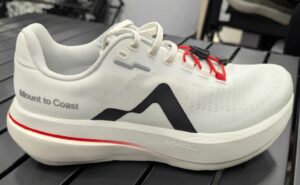
Mount to Coast C1
One of the most successful recent entries into the shoe market is the brand Mount to Coast, who have been on the scene for barely two years, but already have a loyal following among both road and trail runners. Next year will see continued expansion of their shoe lineup with the addition of two new models. In April, the brand will launch the C1 maximal cushion road trainer built for long distance comfort. Its midsole platform features CircleCell midsole foam made from renewable feedstock, which has similar energy return as PEBA compounds, with nearly double the durability. This shoe builds on the comfort and performance of the company’s R1 road shoe, with a slightly wider toe box, and a 7% offset from lateral heel to medial forefoot designed to facilitate the natural contact cycle during stance phase. Stack heights are 42mm/36mm, spec weight is 9.2oz and the C1 will have an MSRP of $180.
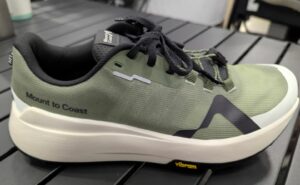
Mount to Coast M1
In June, the M1 will become Mount to Coast’s pinnacle mountain running shoe, engineered for steep and technical terrain. It will introduce a next-gen JetCell midsole compound that delivers high energy return and stability, with material strength three times greater than PEBA. The shoe will have stack heights of 36mm/32mm, with a wider base and higher sidewalls than the company’s existing T1 trail shoe for improved stability. The 4mm Vibram Megagrip Litebase lugs provide further security in wet and dry mountain conditions. Spec weight for the M1 is 9.9oz, with an MSRP of $195.
Norda
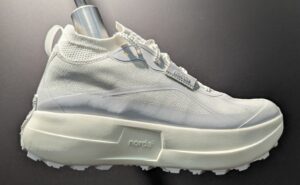
Norda 055
Few brands at TRE generated more excitement than Norda, the Canadian company that combines high performance and sustainable manufacturing as well as anybody in the industry. They released two exceptional trail shoes in 2025, and next spring they will debut the 055 all mountain shoe, designed for ultra-distance efforts on rugged terrain. Its midsole consists of the same Aritel TPEE compound found on the recent 001A shoe, with additional 4mm of height that brings the stack heights to 38mm/31mm. Despite the increased midsole volume, spec weight remains just under 9oz. There is slightly more stability built into the BioDyneema knit uppers, with increased overlays and a bit of ankle padding compared to the 001A, plus a mildly structured heel and high sock gaiter collar to keep out debris. Vibram Megagrip Elite rubber on the outsole has a similar pattern as the 001A shoe, but with larger 5mm lugs. The Norda 055 will have an MSRP of $325.
Nnormal
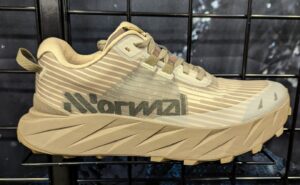
Nnormal Cadi
The brand co-founded by Kilian Jornet in 2022 will introduce a new franchise shoe in March of 2026. The Cadi is named for a mountain range north of Catalonia and is designed as an entry-level model in the company’s lineup. It provides increased comfort elements compared to Nnormal’s existing models but still supports high performance needs for experienced runners who appreciate its increased cushioning. The Xpure supercritical midsole is the highest in the Nnormal lineup, with stack heights of 35mm/29mm and a gentle rocker geometry. The shoe’s ride quality is said to be slightly softer than the company’s Tomir 2.0. A modified last provides added volume over the instep and forefoot to accommodate foot swelling, and a padded ankle collar surrounds the narrow rearfoot. Full-length Vibram Megagrip with 4mm lugs is used on the outsole. This model will also have an Invisible Fit GoreTex version that will be released in the fall. Spec weights are 9.0oz for men, 7.5oz for women, with the GTX versions weighing about a half ounce more. The regular version will retail for $175 this spring, and the GTX version is targeted for $195 in the fall.
Hoka
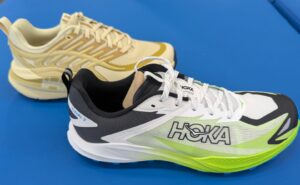
Hoka Zinal 3 (front) and Stinson 8 (back)
Once a disruptor and now an industry standard, Hoka is planning a number of new trail releases for 2026, some of which were under embargo at the show. Among the shoes we’re allowed to preview, the Stinson 8 will release in summer of 2026 as an update to Hoka’s longstanding comfort-first road-to-trail trainer. A newly formulated dual-density midsole adds softness to the previous version, with a thick, shock-absorbing bottom layer underneath an enhanced H-frame layer that provides stability and enhanced heel-to-toe transitions. Uppers consist of more breathable woven overlays, and the 3.5mm outsole lugs are slightly shorter (by a half millimeter) and reconfigured compared to the previous version. The Stinson 8 loses one millimeter of overall stack height, with specs of 44mm/39mm for men, and 43mm/38mm for women, and these are the lightest Stinson shoes to date, at 11.3oz for men and 9.6 for women. MSRP is slated at $180.
In the fall, the Zinal 3 enhances its lightweight agility potential with a new supercritical foam midsole compound. Stack heights are not specified, but it retains the same 5mm drop of the previous version which stood at 30mm/25mm for men and 29mm/24mm for women. Its uppers are modified for enhanced breathability along with a new dynamic forefoot vamp for flexibility. The outsole sees a new proprietary sticky rubber compound with revived orientation and positioning of the 5mm lugs. Spec weights for the Zinal 3 are 8.9oz for men and 7.6oz for women, and the shoe has an MSRP of $150.
Topo
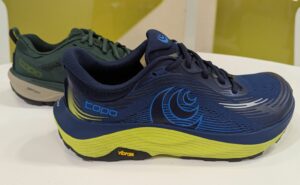
Topo Ultraventure 5 (front) and Terraventure 5 (back)
Topo Athletic previewed updates on two of its most popular models scheduled for spring and summer releases. Both models feature a revised Zipfoam midsole compound that is softer than the previous iteration while maintaining its strong energy return. First up is the Terraventure 5, a low profile shoe that allows lightweight agility and good connection to the ground. The 2026 version is slightly lighter at 10.3oz, with the same geometry of 25mm/22mm stack heights and a forefoot rock plate. Additional updates include a new recycled mesh upper, and the addition of a universal gaiter attachment rather than the Topo proprietary system. This is a transition the entire Topo trail series will undergo with each new release. The Terraventure 5 will release this spring for $145, and an Invisible Fit GoreTex version will follow in the fall at a slightly higher price point.
July will bring the new Ultraventure 5, which updates the most popular trail shoe in the Topo lineup. It gets similar updates as the Terraventure including the new Zipfoam midsole, a recycled mesh upper with increased thickness and durability, along with the new universal gaiter system. Midsole geometry stays the same here, with heights of 35mm/30mm, and a listed spec weight of 10.7oz for men and 8.7oz for women. Like the Terraventure, the Ultraventure 5 will have a GTX version released later in the year. In addition to a modified upper, the GoreTex Ultraventure 5 will have a different outsole than the regular model. The regular Ultraventure 5 uses the same Vibram XS Trek outsole as the previous version, but the GTX will include a Vibram Megagrip outsole for improved traction in wet conditions. The Ultraventure 5 will retail for $155 for the standard version and $180 for GTX.
Brooks
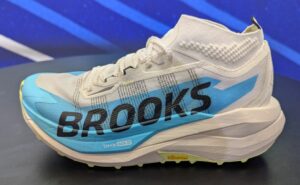
Brooks Cascadia Elite
Brooks seems to maintain customer loyalty with much greater consistency than other brands, and they are leaning into that familiarity at the high end of their performance trail footwear. The previous Catamount models are not carrying over to 2026, replaced by a new Cascadia Elite plated racing shoe that combines the fit and construction elements of the beloved Cascadia line with high-end technologies for chasing podiums or FKTs. The midsole features a horseshoe-shaped carbon-infused Pebax trail plate in the rear and midfoot, sandwiched between layers of DNA Gold supercritical cushioning, with stack heights of 40mm/34mm. Vibram Megagrip Elite outsole covers almost the entire surface with angled lugs for vertical optimization. Matryx engineered woven uppers add strength and durability, and incorporate PU-coated yarns for water resistance, with a gaiter bootie for debris protection. Weight of the Cascadia Elite is 9.3oz, and the shoe will be released this spring with an MSRP of $275.
Salomon
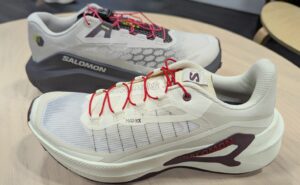
Salomon Ultra Glide 4 (back) and Genesis 2 (front)
Over the past couple of years Salomon has been consolidating their trail shoe lines based on similar build, which has an added benefit of easier name recognition by customers. Two franchise lines that will see new releases in 2026 are the Ultra Glide and Genesis. First up will be the Ultra Glide 4 in January, an update to the company’s all-purpose max cushion shoe that drops weight and becomes more breathable than the previous version, while maintaining the OptiFoam midsole compound with 41mm/35mm stack heights. The main development here is incorporation of the Relieve Sphere wave bed underfoot technology first seen on the S/Lab Ultra Glide, which gives the shoe a very smooth overall ride quality on varied terrain. Spec weights for the Ultra Glide 4 are 9.9oz for men and 8.9oz for women, and the shoe will have an MSRP of $150.
Fall brings the release of the Genesis 2, the first update to a popular new model that launched three years prior. The new version gets slightly flatter, with stack heights of 34mm/26mm that result in a 6mm drop rather than 8mm seen on the original. The midsole compound remains full OptiFoam, but a redesigned active chassis system is integrated into the midsole rather than positioned more externally. The Contagrip outsole has also been updated to provide more surface area traction. Because this shoe is built for agility on technical terrain, the updates here are primarily focused on stability and durability while maintaining a similar ride quality. The Genesis 2 weighs 9.6oz for men and 8.3oz for women and will have an MSRP of $150.
Merrell
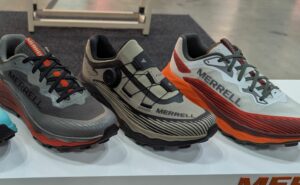
Merrell Agility Peak series
In 2026 Merrell will update one franchise trail line as well as debut a new mountain super shoe. In February, the Agility Peak 6 will update a shoe intended for moderate to technical terrain. Version 5 of this shoe got a 1mm increase in stack heights, and the Agility Peak 6 creeps up one more millimeter across the board to have stack heights of 32mm/26mm of FloatPro foam. Flex Connect grooves are extended to full length through the midsole and outsole to flexibility, while a forefoot rock plate provides enhanced underfoot protection. Fit of the uppers have been tweaked for improved heel fit and better overall lockdown. The same Vibram Megagrip compound with 5mm lugs from the previous version is used, but with a more open web layout to decrease outsole weight. The Agility Peak 6 gets a nice overall decrease in weight, losing almost a full ounce with specs of 9.5oz for men and 7.5oz for women. It will retail for $160, with GTX and BOA lacing versions released later in the year at higher price points.
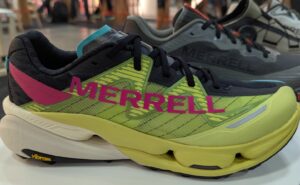
Merrell Speed ARC Peak
Merrell enters the trail super shoe game in July with the release of the MTL SpeedARC Peak, a carbon-plated model designed for ultra distance racing that has been tested by the company’s elite athlete team for multiple years. It is built on the same last as the Agility Peak series, with Matryx uppers that provide medial to lateral lockdown and durability with dynamic vamp for flexibility. The midsole debuts two new compounds as well as a three-quarter-length carbon plate that acts as a suspension bridge to provide strong propulsion with active stability. Below the plate is an enhanced FloatPro foam with higher rebound and durability than anything Merrell has used to date, and the top layer is a new FloatPro PB compound for softness and energy return. Sticky Vibram Megagrip Elite outsole rubber with 4mm utilizes a similar open web design as the Agility Peak shoes to provide full-surface grip while saving weight. The SpeedARC Peak has total stack heights of 32mm/26mm, weighs 10.7oz and will retail for $290.
Arc’teryx
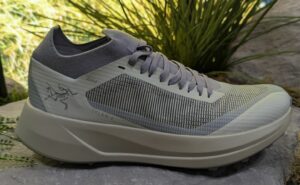
Arc’teryx Sylan 2
The original Sylan shoe was a great model that seemed to fly under the radar a bit in terms of popularity, but hopefully the upcoming Sylan 2 will get the notice it deserves. The shoe receives upgrades from top to bottom, with all construction elements designed to support agility and stability for long distances on technical terrain. On top, a newly engineered woven upper combines seamlessly with a knit tongue and soft ankle gaiter. Full coverage Vibram Megagrip is maintained on the outsole but has a reconfigured lug pattern that is opened up, compared to the previous version, to shed mud more easily. Extensive updates in the dual-density midsole make this the first Arc’teryx shoe to include supercritical foam and a forked three-quarter length carbon composite plate. A 100% Pebax core sits above the plate, with a thick TPEE outer rim surrounding both plate and core as well as underfoot. Total stack heights are 31mm/25mm, and the Sylan 2 is a bit lighter than its predecessor, coming in at 9.5oz for a men’s size 9. The Sylan 2 will launch in March with an MSRP of $220.
Nike ACG
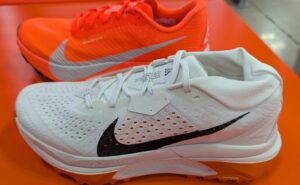
Nike ACG Zegama (front) and ACG Ultrafly (back)
Nike is restoring its former All Conditions Gear branding to its trail running lineup over the next year, which affects the naming conventions of some existing models. The upcoming ACG Zegama is what would otherwise be known as the Zegama 3, built for maximal cushioning and comfort over any distance on any terrain. One welcome change is a new trail-specific last that is wider overall throughout the length, with more height in the toe box to accommodate larger or swollen feet. A dual-density midsole combines new ZoomX 3.0 cushioning that is Nike’s lightest and most responsive compound, maintained by a firmer Cushlon compound for containment and support. Stack heights are increased to 38mm/34mm, but the foot sits fairly deep in the Cushlon rim for stability. A thick midfoot fit band woven into the upper further keeps the foot locked onto the platform, and a new engineered mesh gaiter collar is more secure than the previous version. The outsole consists of Vibram Megagrip rubber with 4mm lugs in multiple sizes and directions. The ACG Zegama weighs 11.8oz and will release in April with an MSRP of $170.
Similarly, the ACG Ultrafly is what would otherwise be the Ultrafly Trail 2. It is a lightweight responsive shoe that has been the most performance-tested shoe among the ACG race team over the past three years. Like the ACG Zegama, the Ultrafly is built on the new trail last. The main attraction here is a dual-density midsole with two different formulations of ZoomX; the core is a softer compound, while the larger external layer is firm for durability. In between is a full-length carbon fiber flyplate that is less rigid than the plates on previous Ultrafly models, and has a longitudinal flex groove for torsional support. Stack heights are 37mm/28mm, and the shoe is about 10% lighter at 10.1oz. Vibram Megarrip Litebase outsole provides excellent grip without excess weight. The ACG Ultrafly will launch in January with an MSRP of $250.
La Sportiva
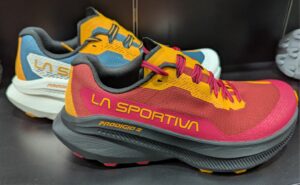
La Sportiva Prodigio 2
The Prodigio line of shoes was one of the best developments from La Sportiva in recent years, and gained the company a much larger following who appreciated the line’s blend of comfort and performance elements. This spring the original Prodigio shoe gets updated to expand its appeal as a one-shoe-does-all tool. While the original Prodigio was wide by La Sportiva standards, the Prodigio 2 will widen its platform slightly more through the whole length of the shoe. Stack heights of 34mm/28mm remain, but the midsole is updated by repositioning the nitrogen-infused XFlow compound directly underfoot, making the sidewalls higher for increased stability and moving the rocker pivot point further forward. On the uppers, the same midfoot wrapping system is in place with a more padded heel collar for comfort, and on the outsole the lugs are slightly deeper at 4mm. The Prodigio 2 weighs 9.3oz for men and 7.9oz for women and will retail for $170. An Invisible Fit GTX model will follow in the fall with an MSRP of $195.
Tracksmith
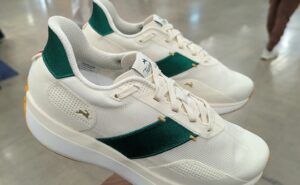
Tracksmith Eliot Ryder
Building on their initial entries to the footwear market, Tracksmith enters the max cushion road shoe category with the Eliot Ryder. It continues construction elements from their other road shoe models in its use of a drop-in midsole insert, except in this case, the slab consists of supercritical ATPU that is 25mm thick. The drop-in system positions the ATPU slab directly underfoot and also lowers the overall center of gravity to offset the substantial overall stack heights of 45mm/37mm. The midsole also incorporates a stabilizing chassis and rocker geometry. Considering this is a shoe for ultra distances, Tracksmith widened the toe box to accommodate swelling and increase long-term comfort. The height-to-weight ratio is impressive, with a spec weight of just 9.5oz. The Eliot Ryder will retail for $220.
Adidas Terrex
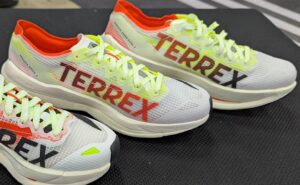
Adidas Terrex Speed 2 (center) and Speed Ultra 2 (right)
The Agravic line gets a full update over the spring and summer of 2026. The star of the lineup is the Speed Ultra 2, a top-to-bottom revamp of this super shoe designed for ultra distance racing. The uppers are redesigned to maintain a snug and stable fit, with a slingshot heel and a lacing system with wider laces for security and increased padding for comfort. The midsole consists of 100% Lightstrike Pro that has been reformulated to be simultaneously softer and more energetic than the previous version. TPU energy rods, which are comparable to carbon plates, remain integrated into the midsole for propulsion and stability. Continental rubber outsoles have more aggressive and slightly deeper 4mm traction lugs than the original version. Stack heights of the Speed Ultra 2 are 44mm/36mm, spec weights are 9.3oz for men and 8.1oz for women, and it will launch in February with an MSRP of $230.
For shorter distance racing, the Agravic Speed 2 is Adidas’s lightest trail racing shoe to date. The new version is stripped down to essentials, with extensive focus on the reengineered uppers with a similarly snug and secure effect as the Speed Ultra 2. A dual density midsole combines Lightstrike Pro with a regular Lightstrike foam rim that combine for agile responsiveness with a low-to-ground feel despite stack heights of 35mm/27mm. It loses the energy rods used on the Speed Ultra 2 for reduced weight and enhanced ground feel. Outsole lug height and shape is similar as the Speed Ultra 2, with a slightly different pattern. The Speed Ultra 2 weighs 8.1oz for men and 6.8oz for women and will retail for $160.
Inov8
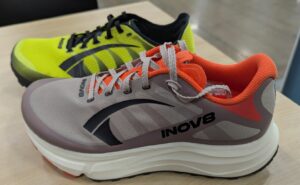
Inov8 TrailFly Pro
Fall 2026 brings a shoe that has been several years in the making, the TrailFly Pro, which combines the company’s emphasis on natural foot movement with advanced technologies to help you push the pace. Supercritical TPEE is the exclusive component of both the midsole layer as well as a 4mm footbed, and total stack heights for the TrailFly Pro are 34mm/28mm. A subtle rocker geometry is incorporated in the midsole, with the rocker point moved back 10% on this shoe, compared to other Inov8 models, to help get you on your toes quicker. Updated Graphene Grip outsole rubber has 4mm lugs and is built with flex channels that have a dual purpose of mirroring biomechanics of the foot, and also allow the TPEE to expand and absorb impact as intended. Ballistic nylon mesh is reinforced in high demand areas and combines with a new NaturalFit last with a more rounded anatomic toe box. Another clever detail is a slightly asymmetric ankle collar that mirrors the anatomy of your ankle bones. The TrailFly Pro weighs 7.9oz and will retail for $195.
We’ll be testing and reviewing as many of the above models as possible in 2026, so keep an eye on our website and magazine throughout the year.