
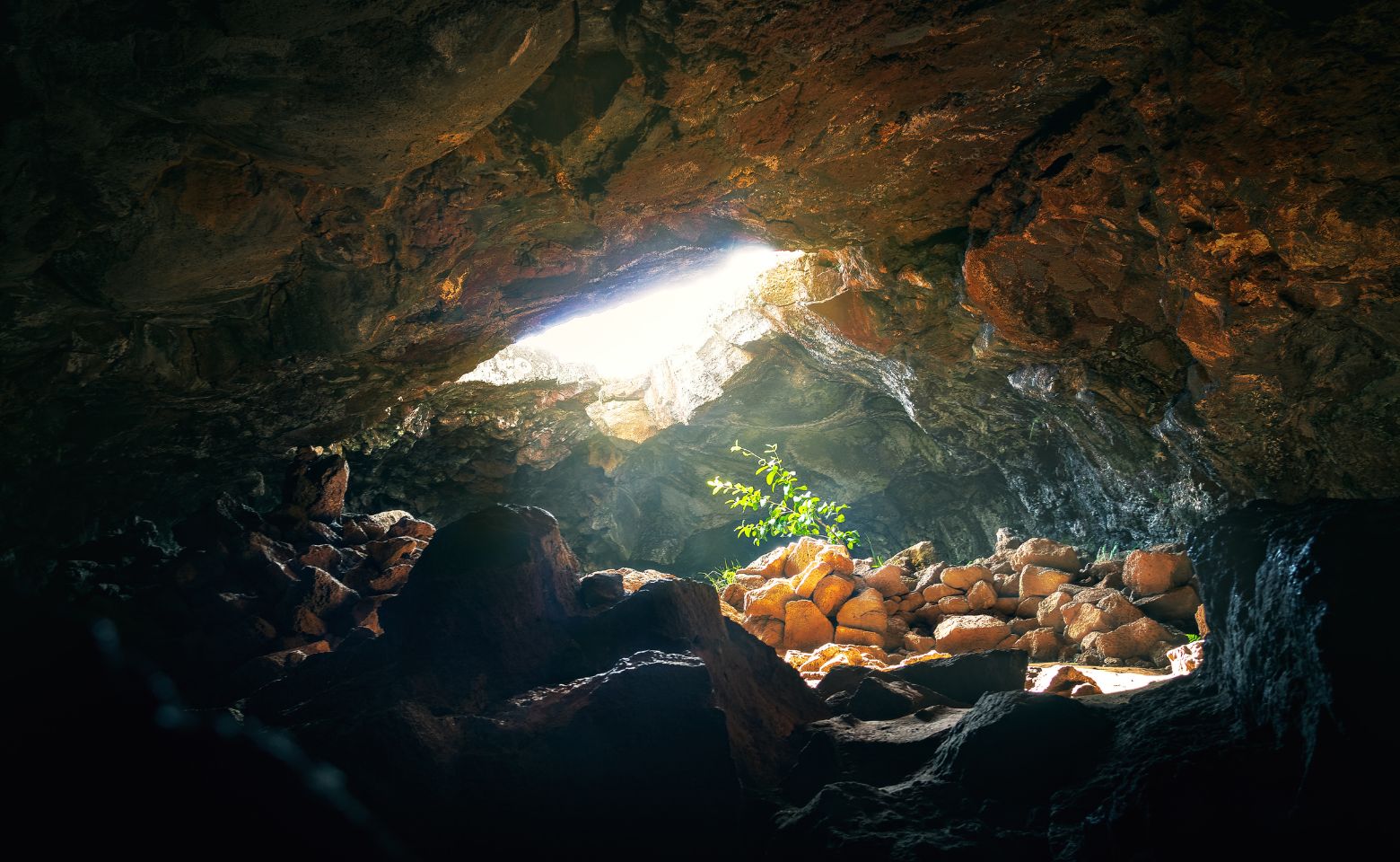
In the ultrarunning community, the idea of the pain cave has taken on almost mythical status. I don’t know who created the term “pain cave” (I can imagine about a dozen hands shooting in the air), but I do know that this is where suffering is glorified—it is the runner’s “red badge of courage.”
How can you call yourself an ultrarunner unless you’ve bragged about how deep and how often you have entered the pain cave? I am not saying that the pain cave isn’t real (I have been there many times myself ), but I am saying that there are better ways to enjoy our sport. You do not have to spend time in the pain cave to be a successful runner.
There are two ways to enter the pain cave: physical or mental, and either way is painful. Physical can be either an acute injury (sprain an ankle) or chronic (hypothermia, heat stroke, rhabdo, etc.). Either way, this physical pain is your body’s way of telling you that something is wrong. Pay attention because ignoring these types of problems won’t make them go away.
The mental side of the pain cave is a much more common destination and can be more easily avoided. That is where gratitude comes into play. This is your secret antidote to the pain cave.
While attending Matt Fitzgerald’s Dream Run Camp in Flagstaff, Arizona, we discussed this subject. At that time, I came up with the term “joy cave” as an alternative to pain cave. But as my wife, Joan, an ultra open water swimmer, pointed out, “gratitude” is a more accurate term. Unlike the pain cave, gratitude is a journey, not a destination. And, by staying on the gratitude path, you can avoid the pain cave completely. If you happen to stray off course (either mentally or physically), gratitude will get you back to where you want to be.
What is gratitude, and how can you use it in your running? Gratitude is the feeling of appreciation or thanks for something special. For trail runners, that can be expressed by the acknowledgement of the amazing opportunity that we have to run in nature, where we are surrounded by peace, beauty and tranquility. It doesn’t get much better than that.
Practicing gratitude can result in enhanced well-being, reduced stress and improved mental health. That can make what feels like a miserable day turn into a great day. And it works. How do I know? I have been using gratitude for years, both for running and non-running activities. I first used the concept in 1995, although I didn’t think of it in those terms at that time.
I was running the Disney World Marathon in Orlando, Florida, and at 10 miles, I was mentally done. I was ready to step off the course, but instead, I started to play songs in my head. I played them over and over for the next 16 miles. The mental funk melted away. I relaxed and ended up running a personal best for a road marathon. And when I finished, I wasn’t even tired. That was my strategy for excellence that only gratitude can provide.
Finding the gratitude path takes practice, just like anything else running-related. Playing songs in my head works for me and helps me relax mentally while performing physically at my best. I let my subconscious pick from the thousands of lyrics in my head. Some favorites are Take It Easy by the Eagles, Tina Turner’s What’s Love Got to Do With It, and Kansas City sung by Wilbert Harrison. I don’t sing all of the lyrics in my head—repetition is the key to my relaxation.
But I acknowledge that mentally singing songs doesn’t work for everyone. Another strategy is finding another runner who is running at your pace and striking up a conversation. If you are lucky and ask the right questions, you can get the other runner to entertain you for hours as the miles fly by.
Another tactic that I use to help guide other runners towards embracing gratitude is to take advantage of my lack of speed and start at the back of the pack at the race start. There, I inevitably encounter new ultrarunners who may be running their first or second ultra. I can tell from the fear in their eyes that they are not sure of what they have gotten themselves into and why they are there. I reassure them that everything is going to be okay and they should not worry about having to run fast. No one cares about their finishing time. The goal is to relax and simply enjoy the day.
Ultras are an adventure. You never know what is going to happen, but you know that you spent good money to come out and enjoy nature. We are the fortunate few. Enjoy the opportunity that you’ve been given, and embrace gratitude. There will be difficult moments (we are talking ultras here), but you have the resources and the resilience to overcome all obstacles to personal success. With that attitude, you make your day and your experience special. That feeling of success is why, after 40 years, I still enjoy doing these crazy things.