
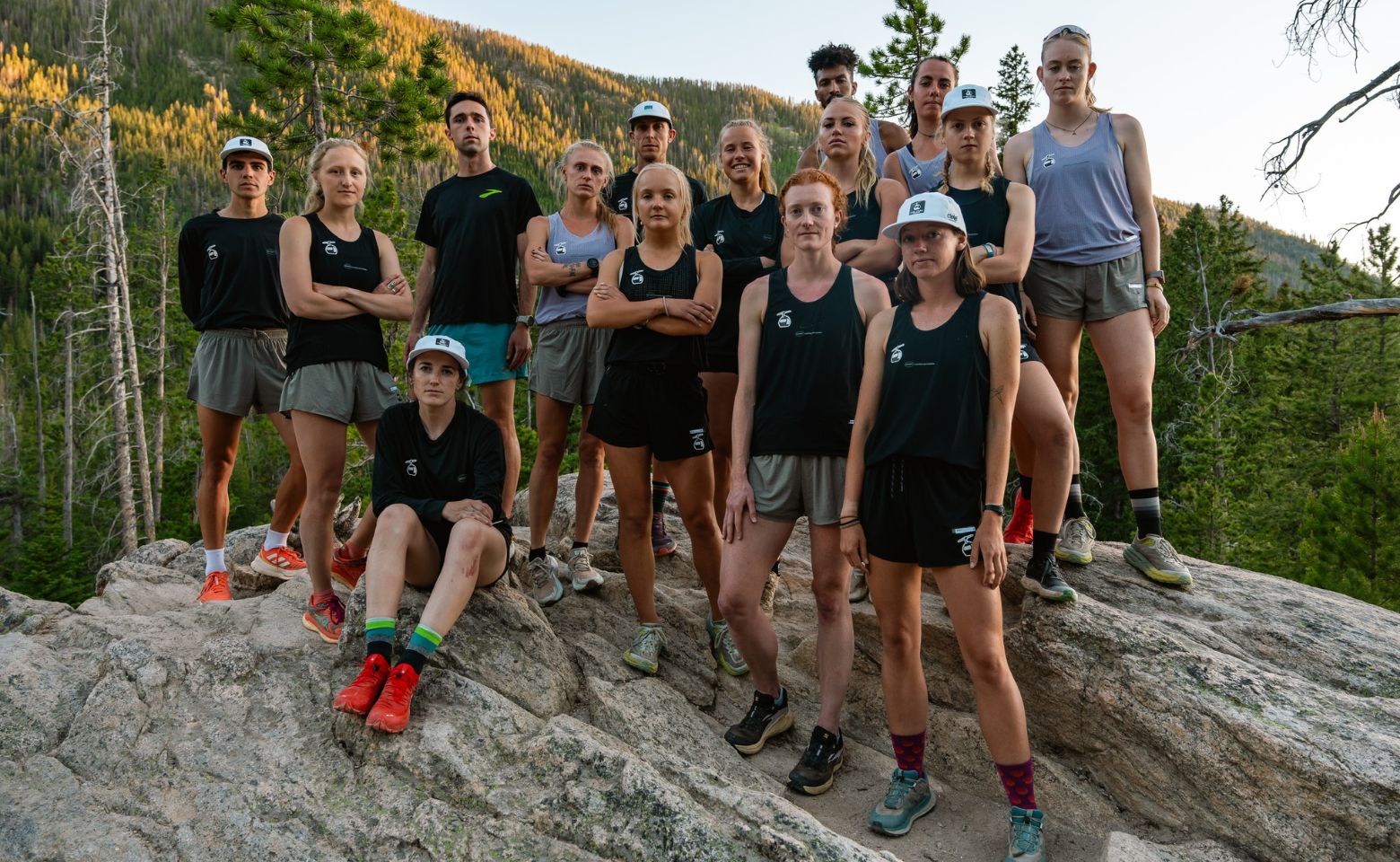
We recently spoke with 24-year-old Shea Aquilano who competes professionally as an ultrarunner. Shea won her first 100-miler at age 21, won the Gorge Waterfalls 100k this year, ran with the female elite pack throughout much of this year’s Western States 100 and will be competing in her second World Trail Championships this September.
This interview has been edited and condensed for clarity.
How did you get into running and progress to ultras?
I played soccer through high school and after my last season, I picked up running for fun. I joined my parents for their short runs in the morning and occasionally hit up some of the local Indiana trails, which are pretty sparse. I ended up making my own 50k on local trails after we were sent home my freshman year of college due to COVID, and things snowballed from there.
How did you balance college life at Notre Dame with a quickly growing ultrarunning career?
Running is a source of joy for me, and if you love something, you’re going to find a way to make it work in your life. That was what I was doing throughout college. I did what I could, and when I was able to get out to a trail race or trails in a different part of the country, it was just that much more special.
Right after graduating college, you made the US Long Trail team at Worlds in 2023. What did you learn from that experience?
I learned the importance of giving myself a shot and cultivating the belief that I can compete at higher levels. For Worlds I trained in flat Indiana. Transferring that over to Austria with 22,000 feet of climbing, I knew I was going to get knocked down, but I learned to put myself in it and give myself a shot.
How did your rapid success influence your post-college plans?
Immediately after college, I did a great six-month internship at Brooks as a run perception researcher. It’s really cool to see how our perception influences how we experience different footwear products. After that, I moved back to Indiana for a short time before moving out to Boulder with whatever I could fit in my car, no plans and no job. Before I signed with Nike, I worked four part-time jobs to make ends meet. The grad school program in sports physiology I was hoping to apply to was slashed, but as one door closed, another one opened and life ended up working out way better than I could have ever hoped.
What drew you to Boulder?
I met the founders of The Trail Team (Boulder-based), Andy Wacker and Karley Rempel, at Worlds in 2023. The team is aimed at supporting the best rising trail runners in the nation, giving them the support and resources that they may not otherwise have access to. It’s a great community. They were the ones that got me to move to Boulder.
Are you still interested in sports physiology down the road?
I would like to pursue that going forward, but I’ve been given this opportunity to pursue my dream as a pro athlete, and right now I feel like I’ve got to go all in.
Talk us through your first big mountain 100-miler, the 2024 Run Rabbit Run. How did you balance the rollercoaster from an apparent win to a disqualification from inadvertently missing a section?
The weeks that followed were very challenging. You do this big feat, your body is wrecked, but then you don’t have the satisfaction. My biggest takeaway was that your work has to be meaningful to you before it can be worthwhile to anybody else. Even failure can become a source of pride.
Moving to this year’s big race, you recently finished Western States. How did race day unfold?
The whole atmosphere was pretty magical. My coach and I worked on a plan for my goal, a top 10 spot. I felt I raced a really smart and strategic race around tenth place for probably 85 miles, and then all the downhills got to my quads and they were shredded, and I ended up walking the last 15 miles. It’s hard to see the top 10 slowly slip away from you, but quitting was never an option. I thought about the fact that you have 30 hours to finish, and there are people that take the full 30 hours, and I still had hours (to finish). You owe the race and the rest of the field that respect to yourself and to others to keep going. A lot of things went right. My stomach had no issues, and I felt like I positioned myself really well to start chasing people down after Foresthill, but just never got that opportunity, unfortunately.
Did you have any conversations afterwards that were particularly impactful?
I got a few messages after the race including one where someone was like, “My seven-year-old daughter really enjoyed watching you during the race, and she’s so inspired, and she wants to pick up and start trail running now.” Messages like that surprised me — I didn’t realize that many people cared or were watching how I showed up authentically at my age.
What draws you to new races and experiences in an already accomplished ultrarunning career at age 24?
Ultrarunning offers a unique avenue to challenge yourself and experience the vividness of being alive. You experience things much more intensely than you would otherwise when you get to the point in a race where all your armor is stripped away. These experiences, and the motivation of figuring out how to execute a well-planned race, give me the curiosity to keep moving forward.
Here are a few rapid-fire questions to close it out:
Favorite race you’ve done? Western States
Favorite pre-race meal? Silken tofu the night before, and then morning of — oatmeal.
Favorite in-race fuel? I’ve been doing a lot of berry First Endurance liquid shots and pickles. Pickles are great.
Favorite thing to listen to when you run? “Stacy’s Mom” (song by Fountains of Wayne)
Favorite weather to run in? Light rain in the 50s