
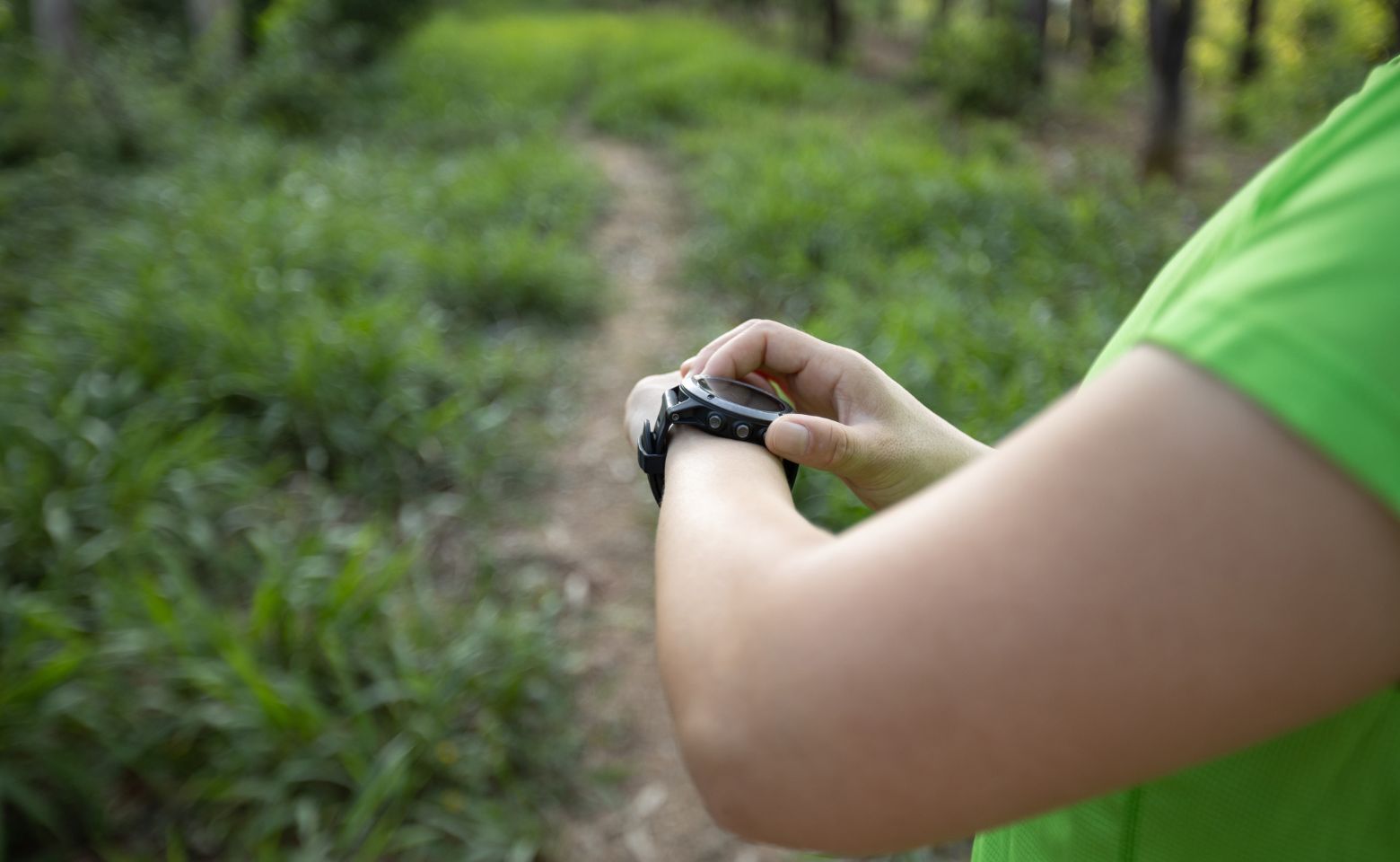
An ultrarunner friend recently asked me what zone I shoot for on a training run. He was taken aback when I said I didn’t even know what a zone was. While I have a Garmin watch, I use it only to track time and average pace. I’ve never even looked at my heart rate during a run, I have no idea what my resting heart rate or VO2 max is and I couldn’t tell a zone from a zebra.
My friend might as well be a cyborg. He measures his sleep and energy via wrist metrics, manages recovery with a Whoop armband and for all I know, wears a smart earring to track earlobe vertical oscillation. Technology is nothing new to the running scene, and the AI hype cycle we’re currently in the midst of should feel familiar. We must not let ourselves be distracted by technological toys, such that, on being asked, “How did your run feel?” we can only answer in metrics.
Most runners will have experienced at least some level of AI invasion in their work lives or hobbies. Some may have already lost their jobs to it (sadly, inevitable). Some lay awake at night scheming ways to prove their usefulness to their superiors, a capability that AI cannot replace (yet). Others are summoning the strength of Terminator’s Sarah Connor to make a last stand and fight back.
In our running lives, though, most of us have felt safe, inured to the gnashing of teeth in the marketplace. AI lives in the cloud, it doesn’t share the trails with our too-human feet and its feet are not prone to blisters or chafing or the crushing weight of self-doubt running beneath actual clouds. We are blessedly removed and safe from the coming of our robot overlords.
Where AI has extended its tentacles into the running world seems harmless. New runners ask ChatGPT for basic 50k training plans, runfluencers prompt their way past a tight blog deadline and shoe companies utilize AI graphics in their designs and advertising. But out on the trail, under the sky with the dirt beneath our feet, we comfort ourselves with the shibboleth, “It’s just a tool.”
But the tools we use also shape us. Ask a roofer to show you the calluses on his hands from his favorite hammer, or a spreadsheet jockey if years spent organizing their work life into cells and columns affect the way they think about their grocery budget. As I sit in the warm sun after a weekend long run carefully filing calluses off my big toe (what my daughter refers to as “cheesing off my calluses”), I reflect on what parts of my non-running life affect my running life.
“How is AI affecting the trail running community?” seems like an absurd question on its face. Yet we are all (for now) human. We are embodied intelligence and surely there’s nothing artificial about us. But I would take it as a compliment if I passed someone in a race and overheard them say, “Man, that guy is a machine.” That would imply a certain relentlessness, an imperviousness to pain and suffering to be envied.
AI cannot run a race, however, a robot recently ran a half marathon to the resounding shrugging of shoulders across the running universe. So, a machine can move faster than a human, but so can my son’s RC car. That robot was incapable of a runner’s high, and while it may move well, it is unable to be moved to tears as the finish line crests into sight. Indeed, that robot is not true AI anyway, just cutting-edge actuators and a better balancing algorithm.
What we can say with certainty is that AI, in all its LLM or agentic forms, is an ascendent form of our age-old relationship with technology, and technology has always shaped human culture. If we want to “McDougallize” it, technology has changed running since the first persistence hunter put down the spear and picked up a digging stick. Make no mistake, even if you’ve sworn allegiance to King Ludd and forsworn the new newest gadgets, you will be (and likely are) shaped by AI. The question is, are you aware of how?
I perform for a living, and there is much hue and cry in my industry over the outsourcing of our creativity. AI can “create,” technically, if we want to play semantic games, but it cannot and will never be able to express itself. There is no interior life to express. Every runner expresses their unique humanity in the way they run, overcome difficulties and inevitably fail. As we all know, the same section run at the exact same time on a different day of the week can feel as far apart as the East Coast is from the West Coast. Our code is buggy as hell and glorious for it, though part of us will always desire to smooth out our rough edges and run the programs error-free, every time.
Author Wendell Berry said: “It is easy for me to imagine that the next great division of the world will be between people who wish to live as creatures and people who wish to live as machines.” As our society leans ever more on software, let us trust more in hard wear on our bodies. No, I don’t think an AI-driven robot will be setting records at Western States anytime soon, and it doesn’t matter if it could. Writing for the New York Times, Ezra Klein quotes the great Marshall McLuhan, “It is, to steal one more ‘McLuhanism,’ ‘the numb stance of the technological idiot’ to treat AI as merely a tool waiting passively for our use. To use AI deeply is to engage in a process, not just to push a button. It will reshape us; it already is. We have to be attentive to how.”
Soon enough, smart sunglasses may analyze your competitor’s gait and notify you of the perfect time to make a move, some unlucky runner will take a chatbot’s advice on a route through the desert and die of exposure and you’ll be passed by someone charging up the slope wearing an exoskeleton. The groundwork is already being laid, so my advice is: work your own ground. Lean into your humanity and listen when your conscious tells you to pick up the gel wrapper on the side of the trail, because the robot chasing you sure won’t – it doesn’t have the programming.
In his wonderful book, The AI Mirror, author Shannon Vallor reminds us, “Remember: the danger to our humanity from AI is not really coming from AI itself. The call is coming from inside the house; AI can devalue our humanity only because we already devalued it ourselves.” Let me be clear, there is nothing inherently wrong with the expanding reach of tech into running – as long as it’s not obscuring our view of the trail ahead of us. The tech bros of Silicon Valley want to plonk power-hungry data centers amidst our valleys and trails. To quote Oscar Wilde, they “know the price of everything but the value of nothing.” So run like a creature, not like a machine. Run like a human, not an algorithm. Pour forth your feelings into your running memoirs and race reports, for our imperfections and emotions are the features, not the bugs.