
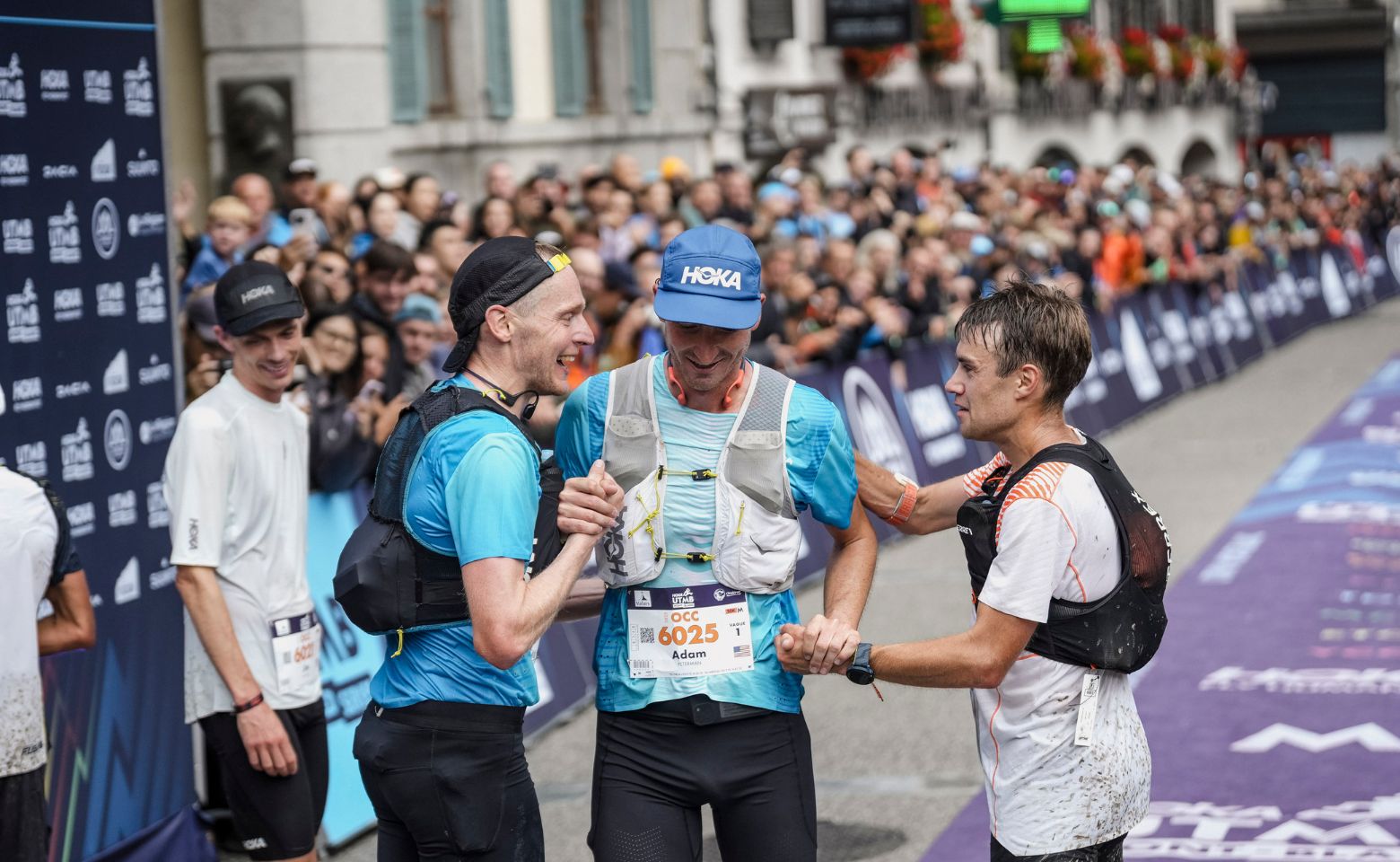
The 2025 World Trail Championships long course in the Spanish Pyrenees demanded one of the hardest physical and strategic efforts of the year against world-class competition.
Katie Schide, Adam Peterman and Shea Aquilano not only showed up, they delivered: Schide won the race outright, Peterman powered through to a strong eighth-place finish and Aquilano secured 14th in a deep international field.
What makes their success even more impressive is that each of them was coming off a major “A” race earlier in the summer. Schide won the Hardrock 100, Peterman rebounded from a challenging Western States and Aquilano made her debut at Western States with a solid 16th-place finish.
Their performances at Worlds weren’t built in a vacuum. They were forged in a long-term plan and enabled by an intelligent transition. This article explores how these athletes—and their coaches—navigated the critical stretch between those summer “A” races and the World Championships using smart recovery, strategic training and data-informed decisions to peak again when it mattered most.
The Demands of the World Championships Long Course
The 2025 World Trail Championships were held in the Spanish Pyrenees, centered around Canfranc, and featured a grueling long-course race of about 82 kilometers (roughly 51 miles) with more than 5,400 meters (over 17,000 feet) of climbing. The route combined long, sustained climbs, high-altitude ridgelines reaching over 2,500 meters (8,200 feet) and technical descents that demanded precision and control. With shifting mountain weather and high elevation, the race presented an exceptionally tough test of both physical and mental resilience.
Transitioning into this race after a summer “A” race required a delicate balance between allowing for full physiological recovery and rebuilding with specificity and intent.
Katie Schide: Versatility, Longer-Term Development and Intrinsic Motivation
Katie Schide’s summer campaign was ambitious: a dominant win and course record at Hardrock, followed by a second-place podium at Sierre-Zinal. But she and coach Jason Koop knew that peaking for Worlds would require more than just carrying momentum—it would demand a recalibrated build and a return to aspects of her physiology that hadn’t been emphasized since last winter.
Schide has already won just about every major trail race in the world, including UTMB (twice), Western States, Diagonale des Fous and Madeira Island Ultra-Trail, with each requiring exceptional durability and aerobic capacity over long distances. Her training to meet those demands has prioritized high, yet carefully optimized volume. But the combination of Hardrock, Sierre-Zinal and the World Championships in this calendar year posed a challenge. Success across that spectrum in a single summer season would require both range and refinement—a different kind of sharpness. Fortunately, both ends of that spectrum are already well-established in Schide’s toolkit.
Rather than rush back into training after Hardrock, Koop and Schide prioritized full recovery—a phase where physiological adaptation truly takes place following overload. “The priority was checking in with myself about what I really wanted to do,” Schide said. “I needed to make sure I was excited about my next races and training for them.” UTMB was an intriguing option for her, but Worlds had always been the original plan. That internal recalibration created the conditions for sustainable motivation and physiological readiness. “Much of my motivation comes from loving training itself—being outside and feeling strong during runs is the best feeling,” she added. “I follow what excites me, which changes over time.”
In this case, the challenge of preparing for the World Championships, with its extremely technical terrain, 82k distance and national team format, offered something novel, and that mattered. “The sport is growing and changing, and that makes it exciting—there are always new races, new competitors, new courses,” Schide noted. She’s motivated by the unknown as much as the familiar, and humbly emphasized she has not won more races than she has won, underscoring how much there is left to chase. The decision to forgo UTMB wasn’t a step away from something she’d mastered, but a step toward a different kind of test. Training for the specific demands of Worlds sparked her curiosity and kept the process fresh—and that, more than the prestige of any single event or outcome, is seemingly what continues to drive her.
Once she was physically and psychologically prepared, Koop introduced a focused VO2max block of short and high-intensity intervals. The goal wasn’t simply to raise VO2max, a metric that tends to plateau in elite endurance athletes, but to restore aerobic power, reawaken neuromuscular efficiency for steep climbing and improve her capacity to recover between high-intensity efforts. Because Schide had spent the past few months emphasizing volume, the reintroduction of VO2max work represented not just a race-specific intervention, but an intentional return to training at her aerobic capacity for long-term development.
Importantly, VO2max work was not something new; it was something familiar. “I do high-intensity work every year,” Schide explained. “I do shorter intervals all winter and in other training blocks during the running season.” While her post-Hardrock block reintroduced those intensities, they weren’t a reinvention. They were timely and exciting. “There was no magic in the length of the intervals,” Schide emphasized. The value, from her perspective, was in her readiness and enthusiasm to do the work.
Schide’s range is world-class and recently overlooked. “I actually run more races shorter than ultra distance during a year than ultras. The ultras just get more media coverage,” she said. Her results confirm that range as well. In 2023, she placed second at OCC, took third at the French Cross Country Championships in March this year, and spent the early part of her career focusing on shorter mountain and Skyrunning events. Her recent success wasn’t a reinvention, it was a continuation of her long-term development and deep physiological versatility.
That same depth extends to her relationship with UTMB. While she has now conquered the course and competition twice, her journey wasn’t linear. “There were several years where my race ended in tears,” she shared, reflecting on earlier setbacks that left her with a strong internal drive to return and improve. Those missed opportunities, and the clarity they brought about areas for growth, were essential to her eventual success. It’s a powerful reminder that even the most celebrated athletes arrive at the podium through years of adversity, resilience and a relentless commitment to growth—far before we celebrate what unfolds in a single race or finish line photo.
The fine-tuning from her recent VO2max block became evident at Sierre-Zinal, where she placed second on fast, punchy terrain—a stark contrast to the grind and rhythm of Hardrock. That kind of range is rare. Koop noted, “She can excel at 100-mile races, sub-ultra distances, in the mountains, on the flats, in the heat and high alpine environments.” The ability to shift fluidly between energy systems and muscular demands, while still progressing long-term, is the hallmark of an elite athlete—one with not just durability, but true adaptability.
They used a mix of objective and subjective metrics to guide the rebuild—monitoring HRV trends, matching normalized graded pace (NGP) with rate of perceived exertion (RPE) and integrating Schide’s own feedback. “You can only build when the body is ready,” Koop explained. “And readiness isn’t just physical, it’s perceptual and psychological too.”
Schide’s athlete-led approach gave her agency in the overall process, while Koop managed the logistical execution. “I let Koop handle the logistics of training while I direct the overall goals based on what motivates me,” she said. “When you’re happy with what you’re doing, you’re happy to do the training.” That alignment between stimulus, readiness and personal motivation allowed her to arrive at Worlds sharp, recovered and fully engaged for an incredible performance.
Adam Peterman: Specificity with Durability
Adam Peterman entered the summer with strong fitness and high expectations, but Western States didn’t go as planned. By Michigan Bluff (mile 55), his legs were already giving out. He struggled with stomach issues, faded early and described the second half as a grind. Still, he finished, earning tremendous respect from the ultrarunning community and, hopefully, inspiring others not to give up when the day goes sideways. “I wanted to cross the line even though I wasn’t having a good day,” Peterman said. “I think what ultramarathons teach me time and time again is that we are capable of so much more than we think.” That finish, though disappointing, became a turning point.
It also marked the beginning of a new chapter. Peterman had coached himself up to that point, but three weeks post–Western States, he began working with John Fitzgerald. From the outset, Fitzgerald didn’t overhaul the system. “What I appreciated during my first few calls with John,” said Peterman, “is that he didn’t want to rock the boat too much… He pointed out that what I had been doing was, for the most part, working.” Instead, Fitzgerald looked for the marginal improvements that would yield big returns later in the season.
The most immediate focus was rest. Peterman took a full week off, followed by a week of cycling. Subjective feedback guided the return to running. “I was really relying on the post-workout comment box,” Fitzgerald noted. “Not just certain metrics or data points, but honest dialogue.”
The first phase of training was low intensity, with an emphasis on building vert, targeting 300–400 feet per mile. Fitzgerald added hill strides and endurance rides with bouts of zone 4 climbing to maintain aerobic development without overloading the musculoskeletal system. “My calf was still recovering,” Peterman said. “So the bike allowed me to train my aerobic system hard while letting the leg heal.”
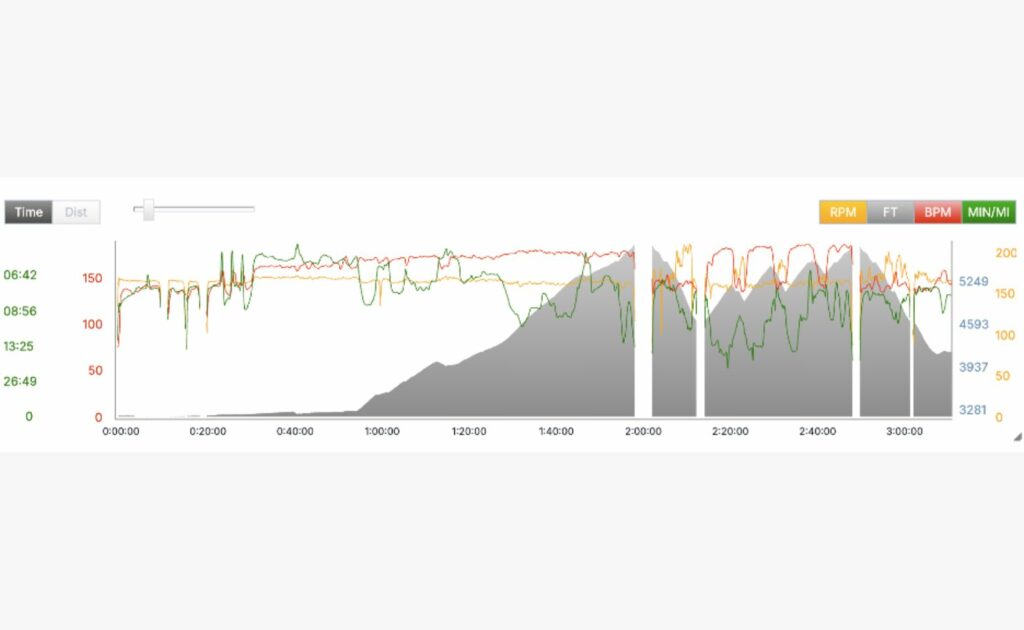
Progressive reintroduction of vertical gain and aerobic intensity post-Western States.
As training progressed, Fitzgerald designed sessions that would systematically improve Peterman’s downhill durability—an area that had broken down late in Western States. “Gone are the days when we think running a lot in the mountains makes us good at downhills,” Fitzgerald said. “Adam needed deliberate downhill running to build confidence and structural resilience.” Each week included fartlek-style downhill intervals (2–5 minutes steady) embedded within endurance runs. These were carefully spaced from intensity days and monitored via TrainingPeaks to ensure adaptation without excessive soreness or load degradation.
Fueling adjustments were also made. Peterman continued to aim for 100g carbohydrates per hour using a mix of high-carb drink, gels and chews. But concentration was fine-tuned to improve absorption, particularly on climbs and descents when gut strain is elevated. Long runs were used to rehearse these fueling strategies under fatigue.
Phase two of the plan ramped up intensity and terrain specificity. “We knew OCC was going to start hard,” Fitzgerald said. “So, we targeted uphill tempo near lactate threshold and paired it with descending under fatigue.” Workouts included 3 x 20-minute climbs with steady downhill returns, long tempo builds off aerobic work and compound sessions like 6 x 3 minutes into 3 x 90 seconds at race-grade inclines. “Vert focus,” Peterman recalled. “Nearly all of my endurance runs were aimed at climbing and descending 300–400 feet per mile.”
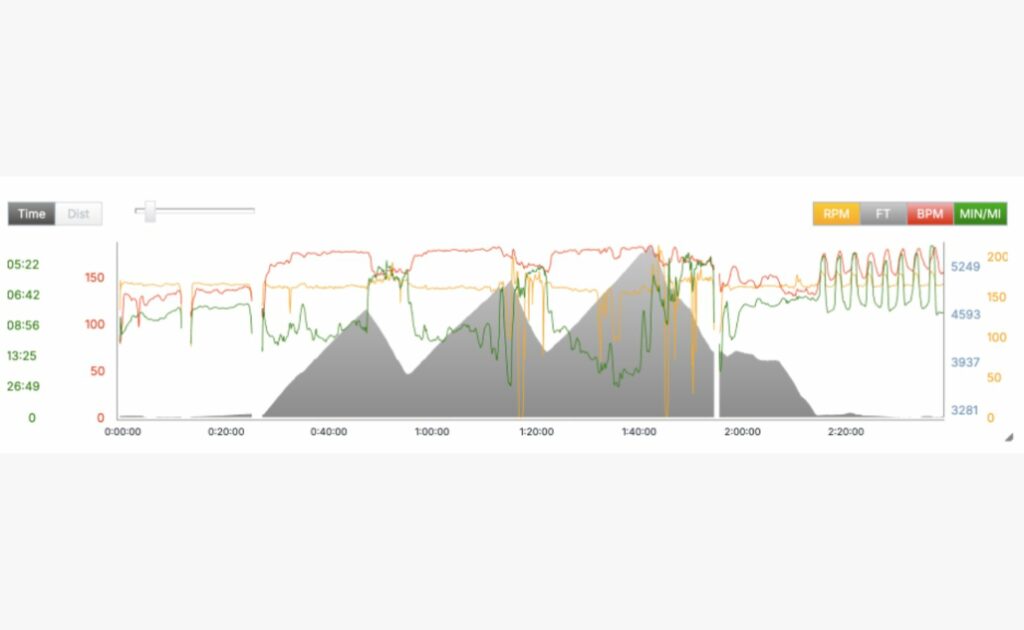
Example session combining long aerobic climbs with short explosive efforts to mimic race-day demands at OCC.
It worked. At OCC, Peterman executed one of his strongest races to date, closing hard in the final 12 miles to move from 10th to 6th. “It was cool to be able to descend fast at the back half of the race,” he said. “That’s the exact opposite of what happened to me at Western States.”
With confidence restored, they took a short recovery window post-OCC and re-engaged for Worlds. Training sharpened with hiking intervals at steady state, more technical descending and a final tune-up session six days out: 1 x 15-minute tempo uphill, 10 minutes recovery, then 2 x 8-minute tempo on hilly terrain. “It was about preventing sluggishness from the higher volume of endurance work,” Fitzgerald explained, “and preparing him for a fast start.”
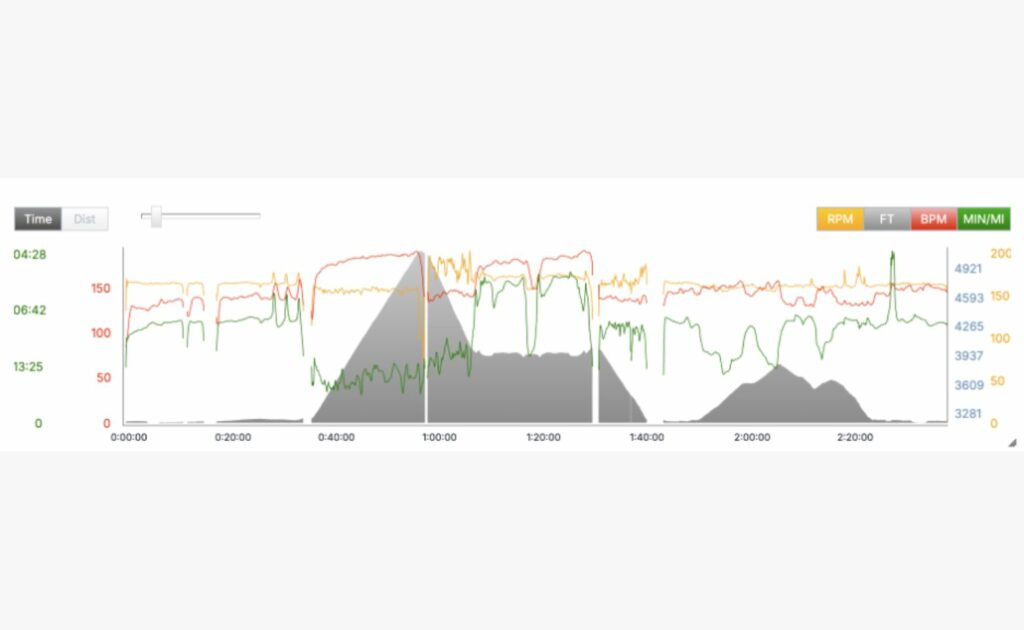
Late-stage sharpening workout: sustained tempo climbing to activate race-day intensity without accumulating excessive fatigue.
At Worlds, he ran a controlled, mature race. “I had a long low from 40k to 60k,” he admitted, “but I never felt like I couldn’t finish. Since I finished States, there wasn’t any part of me that felt like I wouldn’t be able to finish Worlds.”
Peterman’s progression from Western States to Worlds was not linear, but it was intentional. By integrating durability modeling, technical specificity, fueling refinement and real recovery, he and Fitzgerald rebuilt not just fitness, but resilience. “I think we all fall into the trap of thinking our fitness is only built in one block,” Peterman said. “John reminded me that what I’d done before still mattered. The goal now was to adapt to new terrain and demands.” In other words: not starting over, starting smarter.
Shea Aquilano: Vert Specificity
After placing 16th at her debut Western States, Shea Aquilano turned her attention toward the World Trail Championships with a clear goal: build the necessary climbing and descending durability for the Pyrenees, without overloading her musculoskeletal system too much. Working closely with her coach Ryne Anderson, the pair designed a highly specific block that emphasized vert accumulation and technical terrain, but did so with strategic restraint.
“We wanted to push the envelope in terms of vertical gain, but not at the expense of recovery or long-term health,” said Anderson. “We knew we couldn’t afford to layer big vert on top of high intensity or back-to-back long runs. So, we committed to two 10-day vertical blocks, each with 25,000–33,000 feet of gain, spread out with recovery windows.”
 The decision to forgo a traditional long run structure was intentional. “The shift from States to Worlds meant a big increase in feet-per-mile,” Anderson explained. “States is closer to 200 feet per mile. Worlds was over 360 feet per mile. That’s a big jump in 10 weeks. We needed to absorb the vert, not just survive it.”
Anderson uses the CTS 5-zone model to guide training intensity, with each zone anchored to key physiological markers like aerobic and lactate thresholds.
Zone 1 represents active recovery, a very easy effort with minimal metabolic strain.
Zone 2 is steady aerobic work below the first lactate threshold (LT1), where fat oxidation is maximized and lactate remains at baseline.
Zone 3 spans the space between LT1 and the second lactate threshold (LT2), often called Steady State—challenging enough to accumulate fatigue, but below the redline.
Zone 4 targets LT2, where lactate begins to accumulate rapidly; this is the top of steady-state aerobic metabolism.
Zone 5 is above lactate threshold. VO2max efforts that stress the cardiovascular and neuromuscular systems and rely heavily on anaerobic metabolism.
This zone-based framework allows athletes to target specific adaptations throughout a training cycle, from building aerobic efficiency to sharpening high-intensity capacity.
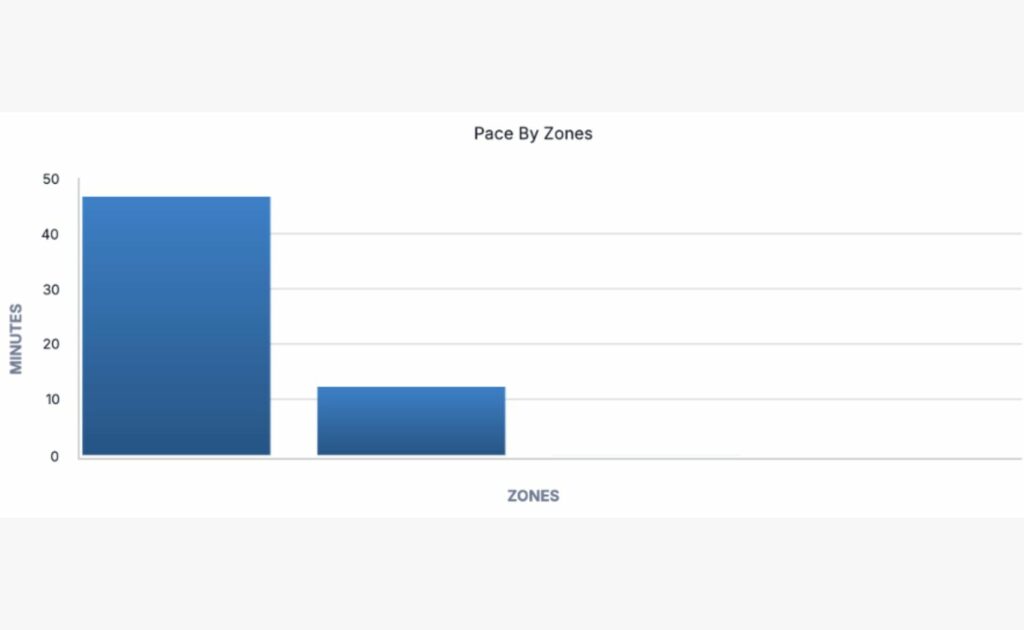
TP Zone Chart – 9/7 Training Run – 6 hrs, 27.3 mi, 8,300 ft vert (73% Zone 1, 27% Zone 2)
To make room for that load, Anderson reduced overall intensity and kept most sessions in zone 1. “The idea was to shift all the bandwidth toward eccentric load adaptation,” he said. “And we know those adaptations kick in after just 1–2 weeks of exposure.”
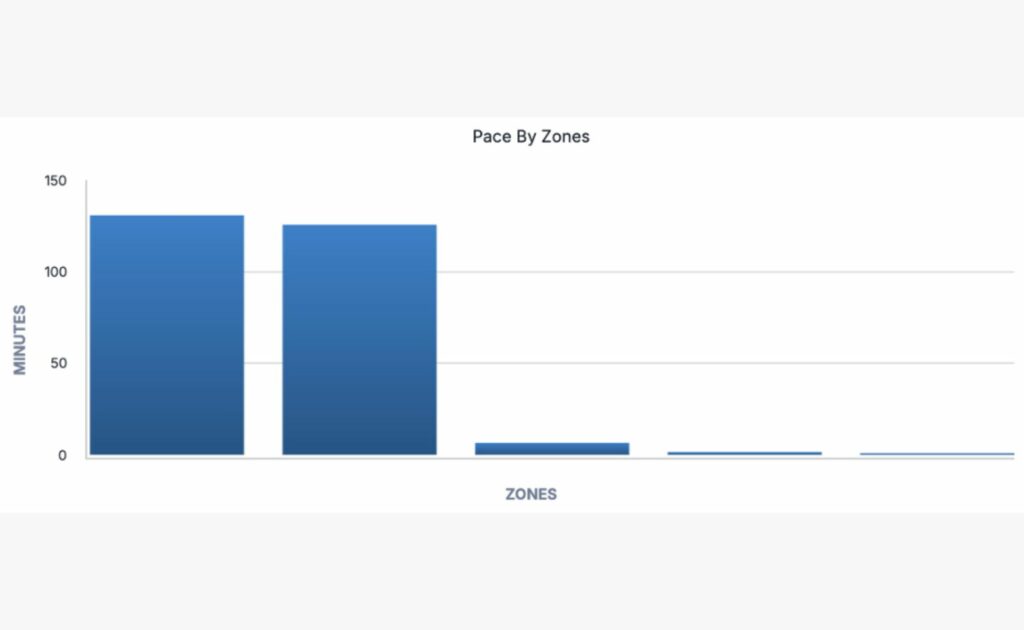
5/24 Long Run: TP Zone Chart from Western States block – highlighting lower % zone 1 (49%) and increased zone 2 (47%) zone 3 (3%)
“Most of the training was at an easy effort,” Shea added. “It was about time on feet, not intensity. And honestly, I never felt burnt out. That made a huge difference mentally.”
In contrast, her Western States prep was much more intensity-driven. Anderson shared that most of her long runs in that phase were executed at the top of zone 2 or dipping into zone 3+ on long climbs.
Shea said the vertical specificity made a massive difference:
“Shifting to vert-focused training with similar feet per mile terrain to Worlds helped in two different ways. First, it reoriented my mindset, understanding that miles were going to take longer on race day and that was okay. Second, it made a massive difference in my steep climbing and descending durability.”
Despite an imperfect summer, travel to Chamonix briefly interrupted her training, Ryne adapted the final weeks to fit around life’s realities. “We knew travel stress was real, so we bracketed that time with recovery on both ends and compressed the final phase into two high-quality blocks.”
Come race day, Shea executed cleanly. “It was one of the most fun races I’ve done,” she said. “I felt really prepared for the terrain. I didn’t have a big low. I had a strong last downhill.”
Ryne saw it as a validation of the model. “The fact that she closed strong on that final descent, after 50 miles and 17k of vert, told me we nailed it.”
Shared Threads Across All Three Athletes
Despite differing backgrounds, race histories and coaches, Katie Schide, Adam Peterman and Shea Aquilano all converged on several core principles in their builds toward the World Trail Championships. These shared threads reflect not only a maturing approach to elite ultrarunning but also highlight how experienced athletes are increasingly guiding their own path—through intentional recovery, terrain-specific fitness and smarter training transitions rooted in sport science.
Recovery Precedes Rebuild
Each athlete prioritized a full recovery phase, physically and psychologically, before rebuilding. None rushed back into structured training too soon. This approach reflects sound training principles, athlete self-awareness and well-established physiological truths.
In endurance training, adaptation follows overload, but only if recovery is sufficient. The stress of racing or training serves as the stimulus, but the body rebuilds and improves during the rest that follows. This is when mitochondrial efficiency increases, muscle tissue repairs, glycogen is restored and the hormonal system returns to balance (Mujika & Padilla, 2000). Skipping or shortening this window can lead to stagnation, injury or burnout.
Ultra-distance efforts can produce prolonged physiological disruption: elevated creatine kinase levels, systemic inflammation, disrupted sleep, altered heart rate variability and hormonal shifts. These markers can persist for days to weeks, even when muscle soreness fades. Psychological fatigue and motivational depletion often last even longer and are equally important to resolve before re-engaging with high-quality training.
Across all three athletes, the approach was deliberate: shut it down, let the body and mind recover fully, then start fresh. Recovery wasn’t an afterthought; it was the essential first step toward performing at the highest level again just months later.
Specificity Guided Every Step Forward
Rather than recycling previous training blocks, all three athletes reoriented their plans to match the demands of the World Championships: a true mountain course through the Pyrenees. This is the essence of the principle of specificity, one of the most foundational tenets of training theory.
For Schide, that meant tuning the edges of an already vast aerobic engine, balancing strength and range with VO2max efforts and steep run reps to refine climbing sharpness. For Peterman, it meant durability through long descents. For Aquilano, it meant vertical efficiency and resilience. As Ryne Anderson put it: “It wasn’t about just getting fit, it was about building the right kind of fitness. That’s not semantics, that’s physiology.”
Individualization: Intensity Matters But Context Matters More
VO2max and lactate threshold training played a role in preparing Katie Schide and Adam Peterman for the World Championships, but not for racing at those intensities. These sessions aimed to restore aerobic power, enhance neuromuscular coordination for climbing and improve metabolic flexibility for sustained efforts on technical terrain.
For ultrarunners, improving fractional utilization—the ability to sustain a higher percentage of VO2max—is often more impactful than raising VO2max itself. Threshold training helps shift this ceiling upward, allowing athletes to go harder for longer without accumulating fatigue. Even in ultra‑distance racing, VO2max and its derivatives remain relevant predictors of performance. (Sabater‑Pastor et al. 2023).
But intensity isn’t always the right lever. For Shea Aquilano, a volume-heavy, zone 1-focused block proved more effective after Western States. Her build prioritized aerobic consolidation and freshness while introducing mechanical and muscular load through high-volume vertical change. Rather than layering more systemic intensity, the focus shifted toward durability, building the specific strength needed for long, mountainous racing without compromising recovery. This strategic approach was very specific to her training history and physiology.
The takeaway: high-intensity training is valuable, but only when applied at the right time, for the right reasons and tailored to the individual athlete. Long-term development should factor into this decision heavily.
A Better Model for Transitioning Between “A” Races
Ultrarunning has long treated post‑race recovery as binary: either take an extended off-season or jump into the next build. But the 2025 seasons of Katie Schide, Adam Peterman and Shea Aquilano reflect a more evolved approach, one that’s grounded in physiology, thoughtful planning and athlete-led decision-making.
Rather than treating each “A” race as a peak unto itself, these athletes and their coaches used each major race as both a test and a stimulus. What mattered most was what came next: a complete physical and psychological reset, followed by a deliberate, individualized progression tailored to the next race’s demands.
This approach mirrors established endurance science. Supercompensation, improved fitness following overload, only occurs with sufficient recovery (Turner, 2011). The greater the stress, the more critical the rebound timing. Proper recovery becomes a springboard, not a setback.
Clear, athlete-driven goals are the cornerstone. Schide emphasizes that motivation and planning must come from within: “The goals have to be mine. My coach supports the process, but I lead the way.” When goals are clearly defined, recovery and training timelines can be mapped with purpose—avoiding premature builds or missed peaks. These plans must be individualized based on physiology, life demands and recovery capacity.
Training emphasis also shifts between races. After events like Hardrock or Western States, aerobic and muscular endurance are already high. Subsequent training blocks can focus on underdeveloped capacities: VO2max, lactate threshold, technical terrain or downhill durability.
Race execution reflected this. These athletes didn’t just arrive fit, they arrived course-ready: dialed fueling strategies, terrain-specific training adaptations and metabolic readiness for long climbs and technical descents.
This model doesn’t guarantee multiple peaks per year, but it shows that with clear, athlete-led goals, adequate recovery and disciplined planning, athletes can move from one “A” race to the next in somewhat marginal windows, not just recovered, but better prepared.
References
1. Sabater-Pastor, F., Tomazin, K., Millet, G. P., Verney, J., Féasson, L., & Millet, G. Y. (2023). VO2max and Velocity at VO2max Play a Role in Ultradistance Trail-Running Performance. International Journal of Sports Physiology and Performance, 18(3), 300-305. Retrieved Oct 3, 2025, from Human Kinetics.
2. Mujika, I., Padilla, S. (2003). Scientific bases for precompetition tapering strategies. Medicine & Science in Sports & Exercise. PubMed
3. Turner, A. N. (2011). The science and practice of periodization: A brief review. Strength & Conditioning Journal, 33(1), 34–46. S&C Journal.